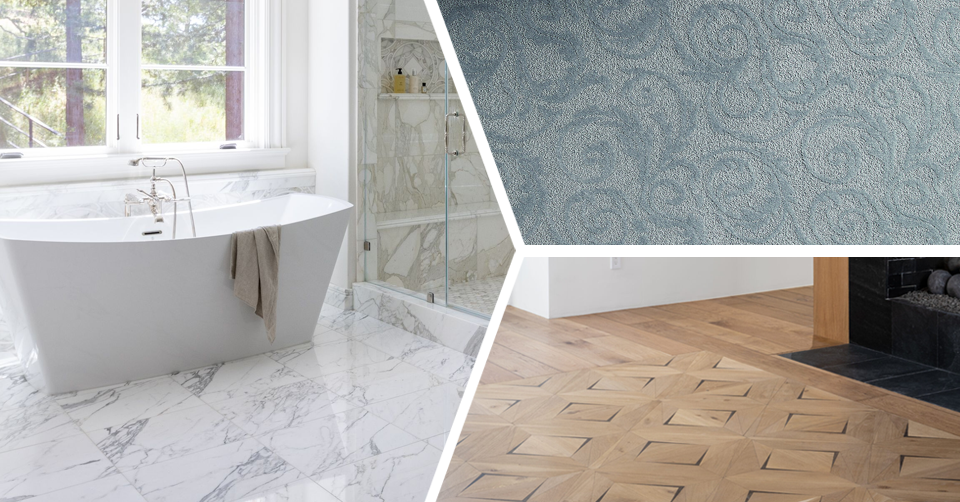
How to Choose the Right Flooring for Your Home
Most people think of flooring as a surface. Something you stand on, walk across, clean, and eventually replace. But long before any of that, it does something quieter. It sets the tone of a space before you’ve taken more than a few steps inside.
You can feel it almost immediately. The cool firmness underfoot when you enter a tiled kitchen. The slight give of wood in a living room that makes the space feel settled, lived in. The softness of carpet that slows you down without asking. These aren’t conscious decisions. They happen in the background, shaping how a home feels moment to moment.
Flooring is often one of the first decisions made in a home, and one of the hardest to change later. In places like the East Bay, where homes move between indoor and outdoor living, where moisture, temperature shifts, and daily traffic all come into play, that choice becomes even more layered.
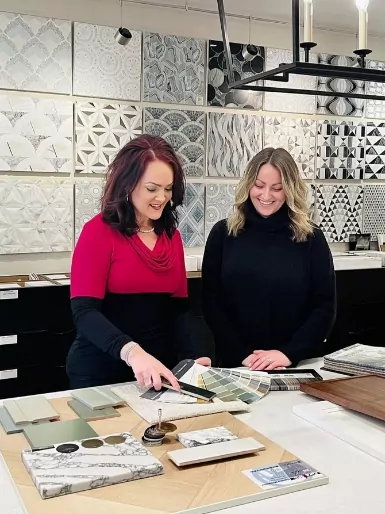
In practice, selecting flooring is never just about appearance. It’s a process of understanding how a material behaves once it’s no longer a sample, but a surface you live with every day. A well-developed flooring selection guide is about understanding how those materials hold up in everyday use. Working alongside homeowners and designers, as we do at our Luxe Home showroom, the focus shifts from what looks good in a sample to what will actually feel right underfoot, year after year.
Choosing Flooring Based on Your Lifestyle
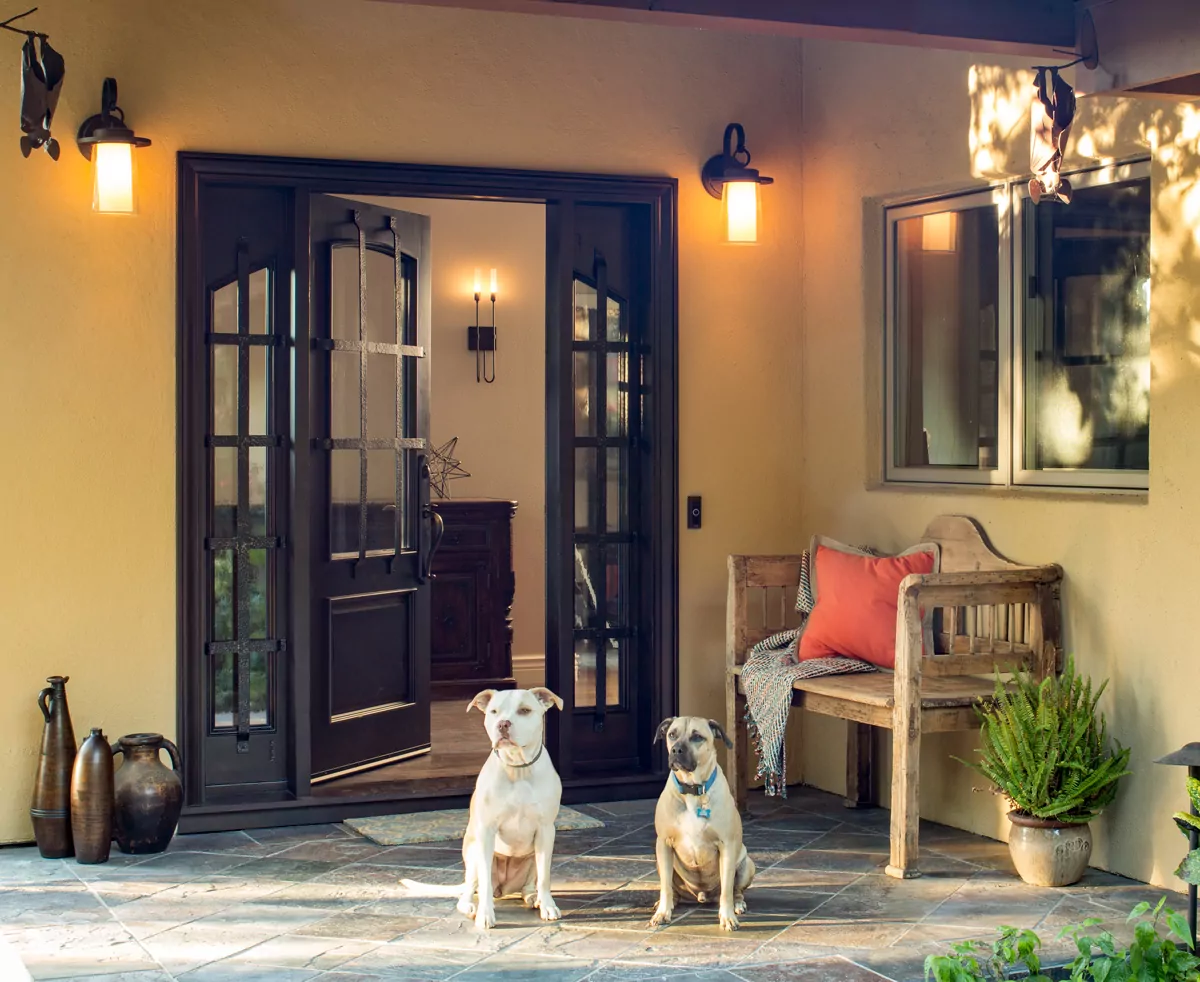
Understanding how your home is used is the first step in choosing flooring effectively. Before focusing on specific materials or finishes, it’s important to consider the demands of daily life, whether that includes high foot traffic, pets, entertaining, or simply creating a more comfortable and quieter environment.
Key factors such as durability, maintenance, and everyday wear should guide your decision. A flooring choice that doesn’t align with how you live will quickly become impractical, while the right material will support both function and design over time.
Most Durable Flooring Options
Durability is rarely just about hardness. It reflects how a material responds to pressure, friction, and time. In high-traffic homes, surfaces like tile flooring, SPC flooring, and engineered wood flooring tend to perform more consistently. Tile flooring is known for its exceptional resistance to scratches, exposure to moisture, and constant use. SPC flooring, with its rigid core construction, is designed to handle daily wear while remaining fully waterproof. Engineered wood flooring provides the look of natural wood with added stability.
In homes with pets, the question becomes more specific. Scratches, moisture, and repeated movement in the same areas begin to matter more than initial appearance. The best flooring for dogs is not only durable but also forgiving. Materials like SPC flooring and tile flooring tend to perform well, especially when paired with finishes or textures that soften the visibility of wear rather than trying to prevent it entirely.
Finishes and textures also play an important role. Matte finishes, textured surfaces, and natural variation can help minimize the appearance of scratches, scuffs, and debris, allowing floors to maintain a more refined appearance over time.
Understanding the Difference in Flooring Types
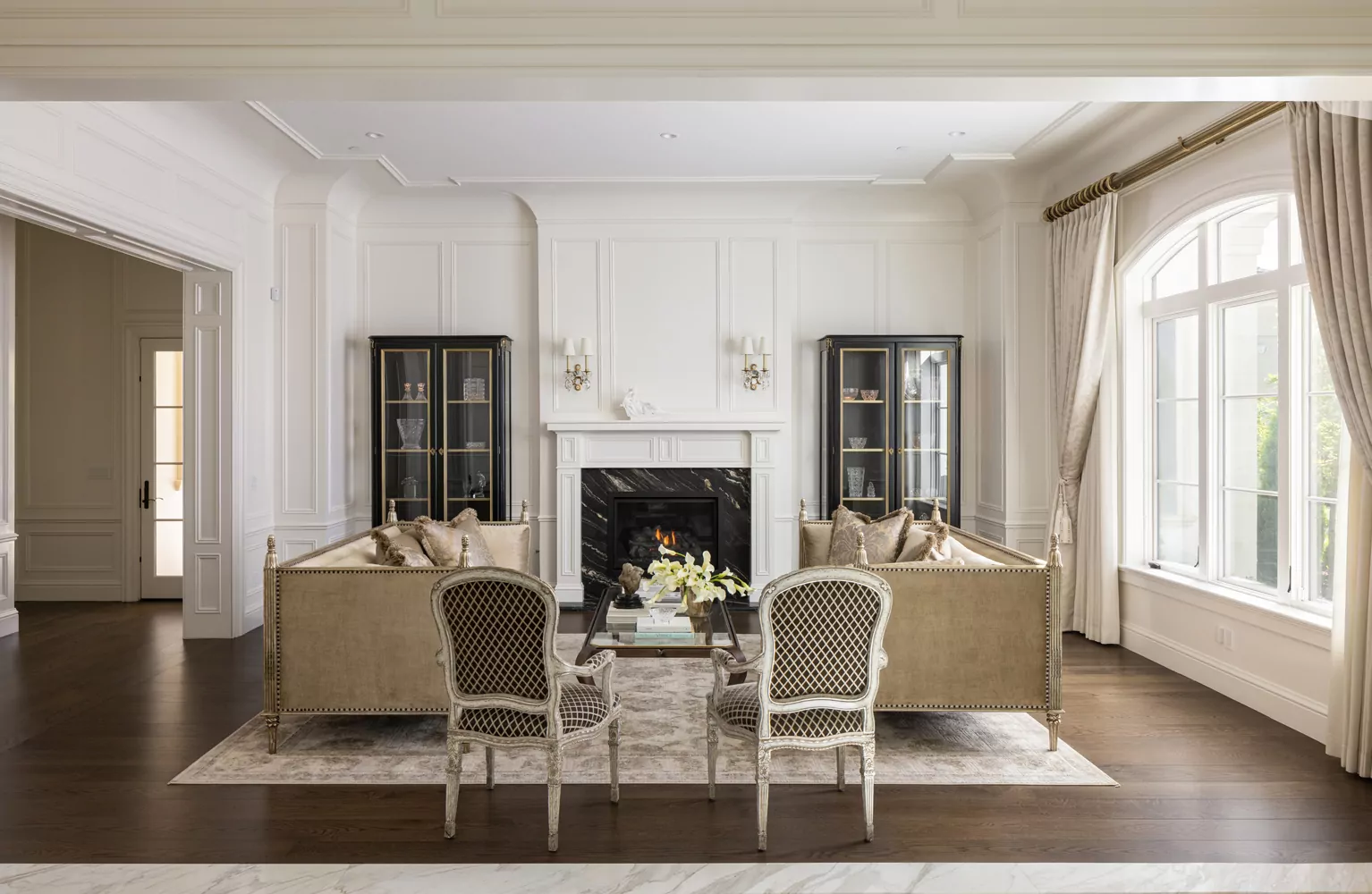
Once lifestyle needs are defined, the next step is understanding the difference in flooring types and how each material performs in real-world conditions. While many options may appear similar at first glance, differences in construction, materials, and finish can significantly impact durability, maintenance, and overall feel.
Each flooring type brings its own set of strengths and limitations. Some prioritize longevity and natural character, while others are designed for stability, moisture resistance, or ease of care. Understanding these distinctions provides a clearer foundation for making informed decisions.
Below is a closer look at the most common flooring types and how they function across different environments.
Hardwood Flooring
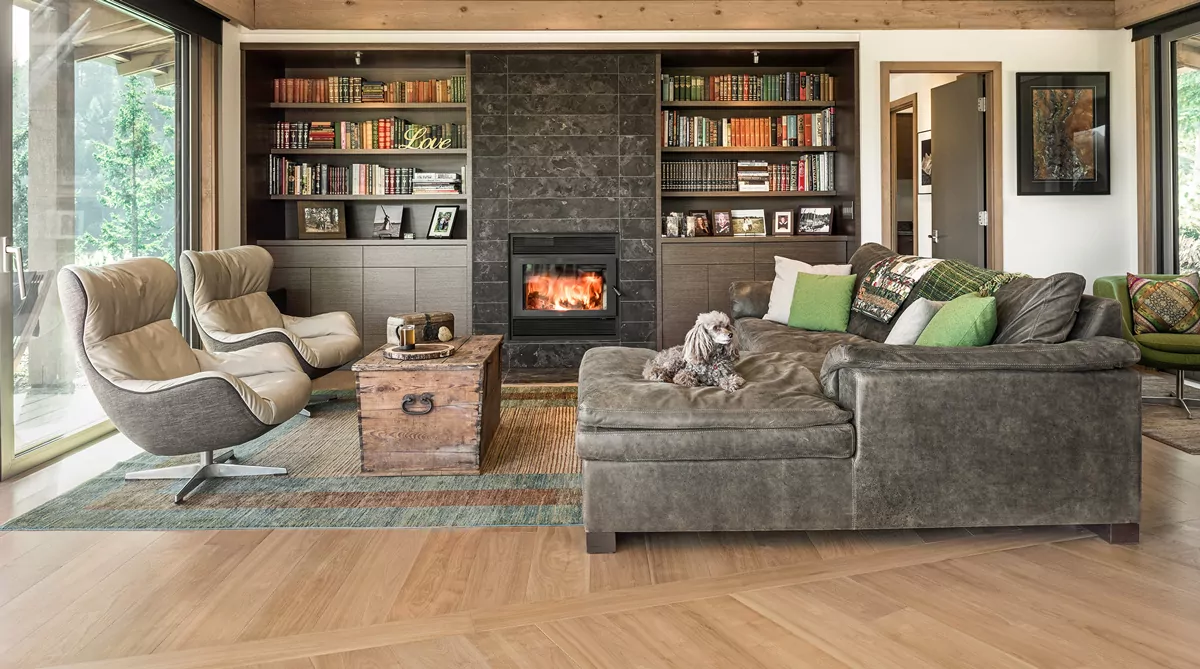
Hardwood flooring is one of the most timeless and widely recognized options, valued for its natural beauty and long-term durability. There are several types of hardwood flooring, including solid hardwood and prefinished options, along with a range of species that influence color, grain, and hardness.
One of the key advantages of hardwood flooring is its longevity. It can be refinished multiple times, allowing it to evolve with the home over decades. Its natural variation adds warmth and character, making it a preferred choice for living spaces and bedrooms.
However, hardwood flooring is sensitive to moisture and environmental changes. It can expand, contract, or warp in areas with high humidity or temperature fluctuations, making it less suitable for moisture-prone spaces.
Still, in the right setting, hardwood flooring does something few materials can. It creates a sense of continuity, both visually and in how the space feels over time. It’s one of the few surfaces that often feels more natural as it ages.
And that’s often the reason it’s chosen—not because it looks perfect on day one, but because it doesn’t need to stay that way to feel right.
Engineered Wood Flooring
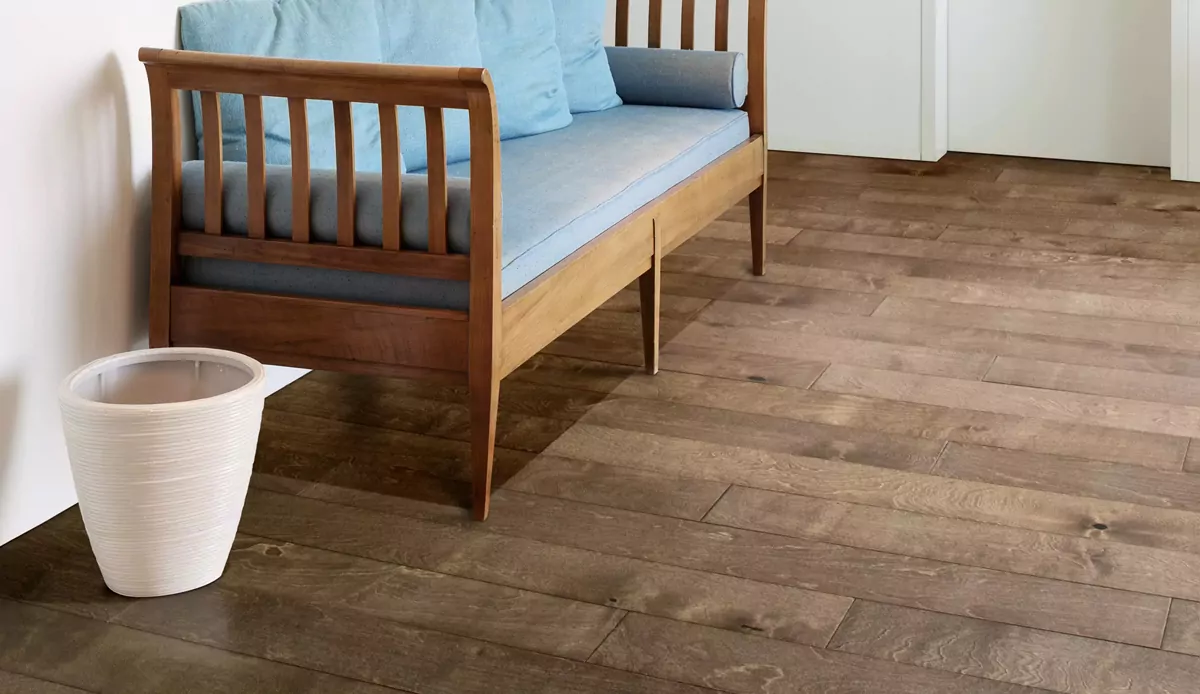
At a glance, engineered wood flooring is almost indistinguishable from hardwood. The same grain, the same tonal shifts, the same way light moves across the surface. Most people can’t tell the difference when they first walk into a room.
The distinction reveals itself over time in how the material responds to the environment around it.
Engineered wood flooring is built in layers. A real wood veneer sits on top, but beneath it is a structured core designed for stability. That construction changes how the floor behaves. Where solid hardwood subtly reacts to humidity and temperature, engineered wood is more controlled and less prone to movement.
Visually, very little is sacrificed. Engineered wood flooring still carries the warmth people associate with hardwood flooring. It still reads as natural and creates a sense of continuity across a space. But beneath the surface, it is managing the conditions of the home without drawing attention to it.
There are limits, of course. Depending on the thickness of the top layer, it may not offer the same refinishing potential as solid hardwood. Its lifespan plays out differently—not necessarily shorter, but less adaptable over decades.
Even so, in many modern homes, engineered wood flooring aligns more easily with the way people live now. Open layouts, indoor-outdoor transitions, and less controlled environments. It meets those conditions without asking for much in return.
Tile Flooring
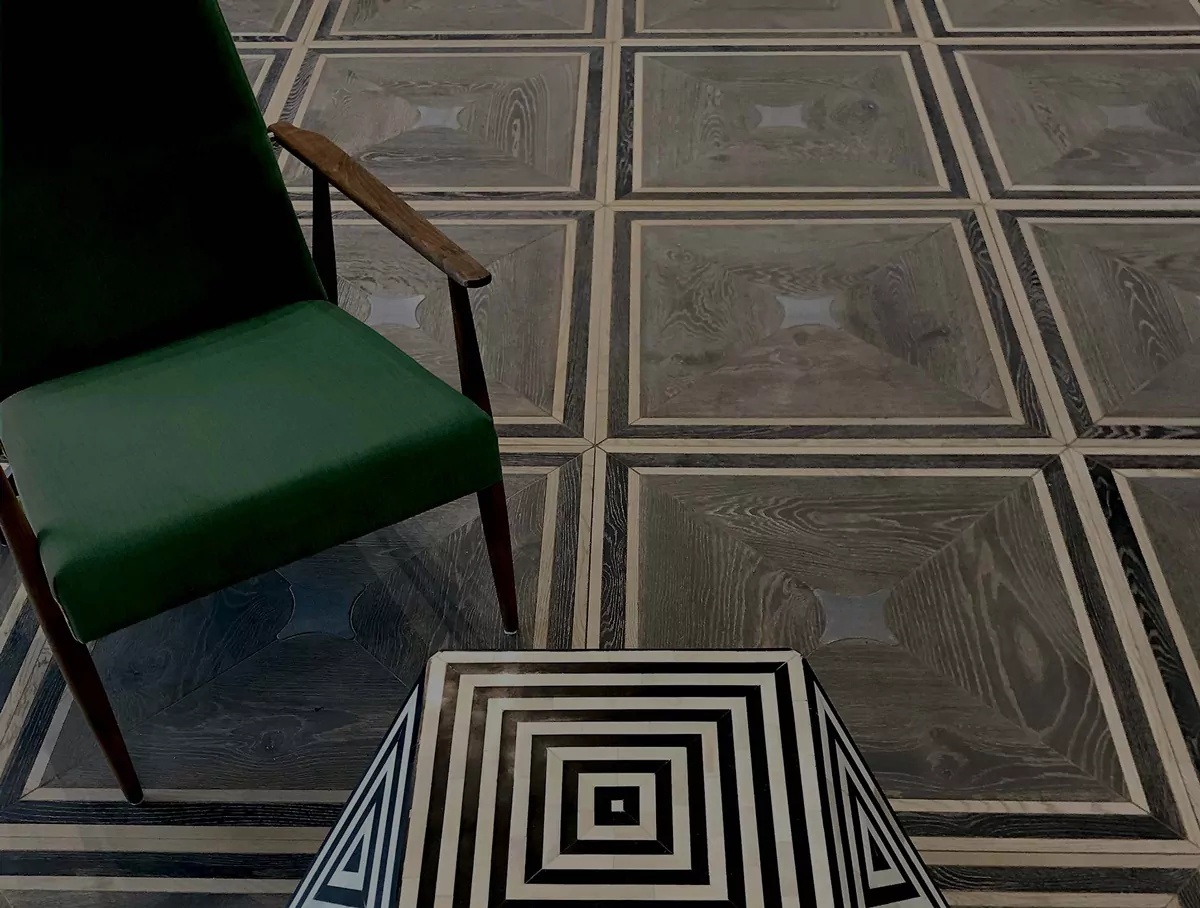
Tile flooring creates a more structured, defined feel within a space. There is an immediate sense of structure when you walk onto it. The surface is firm and unmoving, almost architectural. It doesn’t soften under pressure or shift with time. It stays exactly where it was set, holding its lines, its edges, its pattern.
That consistency is what makes tile flooring one of the most durable flooring options available. Materials like porcelain and ceramic are built to withstand constant use, foot traffic, moisture, and temperature changes without showing much of it. In spaces like kitchens and bathrooms, that resilience becomes part of how the room functions over time.
But durability isn’t the only thing tile offers. It also carries a kind of visual precision. The repetition of forms, the grid of grout lines, and the variation in pattern or color create rhythm across a surface. Some tiles feel quiet and uniform, others more expressive, almost decorative. The floor becomes an active part of the overall design.
However, tile flooring offers very little flexibility underfoot. It reflects sound, holds onto its coolness, and provides minimal give. In spaces where people linger, like living rooms and bedrooms, tile can start to feel less inviting over time. Grout lines also require attention, especially in areas that see regular use.
Still, in the right setting, those qualities feel intentional. The cool surface in a sunlit kitchen. The clean, grounded feel in a bathroom. The sense that the floor will look much the same years from now as it does today.
Tile flooring doesn’t evolve the way wood does. It endures. And for many spaces, that’s exactly what’s needed.
SPC Flooring
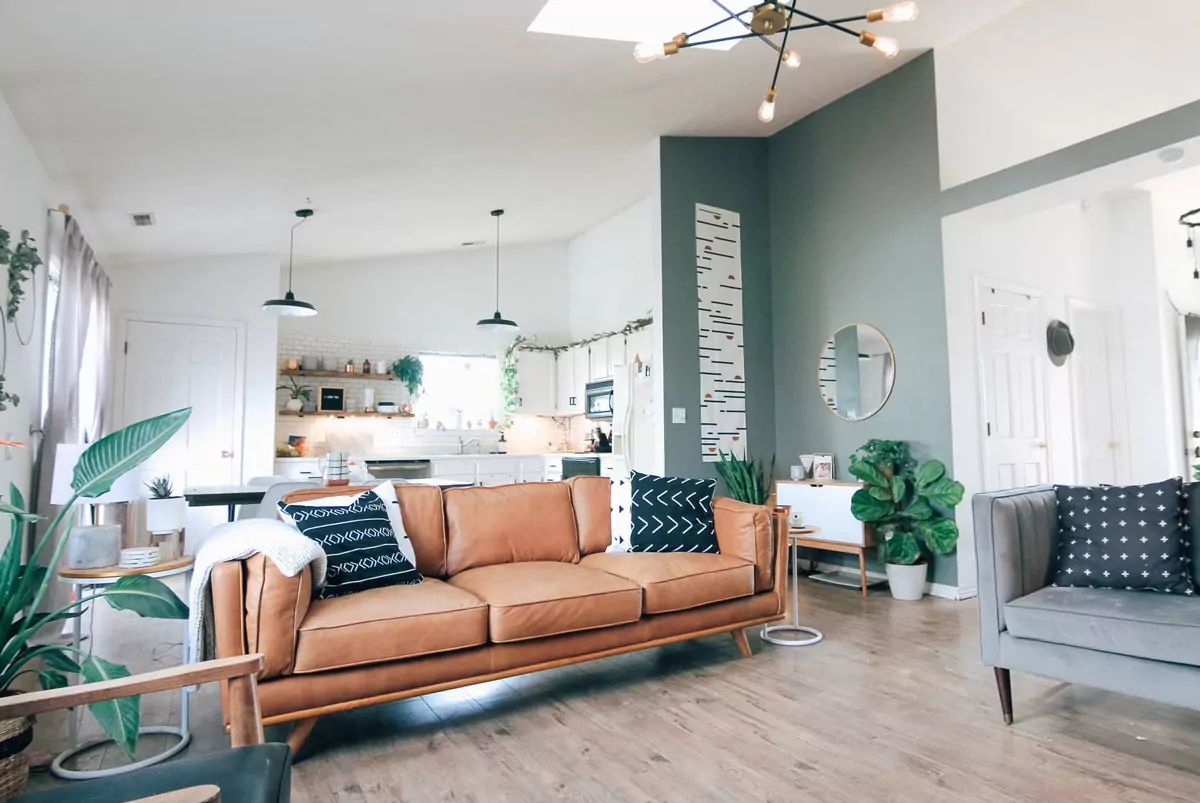
Some materials are chosen for how they look. Others are chosen for what they quietly prevent. SPC flooring falls into the second category.
SPC flooring, or stone plastic composite flooring, is a modern solution designed for performance and durability. It features a rigid core construction that provides stability and resistance to expansion and contraction.
One of its key benefits is that it is fully waterproof, making it well-suited for moisture-prone areas such as kitchens, bathrooms, and basements. It is also resistant to scratches and dents, which makes it a practical option for busy households.
There’s a different kind of comfort here. Not softness, but predictability. The surface feels firm, consistent, and easy to maintain. It doesn’t develop the same patina as natural materials, and it doesn’t invite the same kind of aging.
In many homes, especially where durability and moisture resistance are non-negotiable, SPC flooring becomes a practical anchor. It balances durability with ease of maintenance while still offering a range of design styles. It allows the rest of the space to evolve, while the floor remains constant beneath it.
Natural Stone Flooring
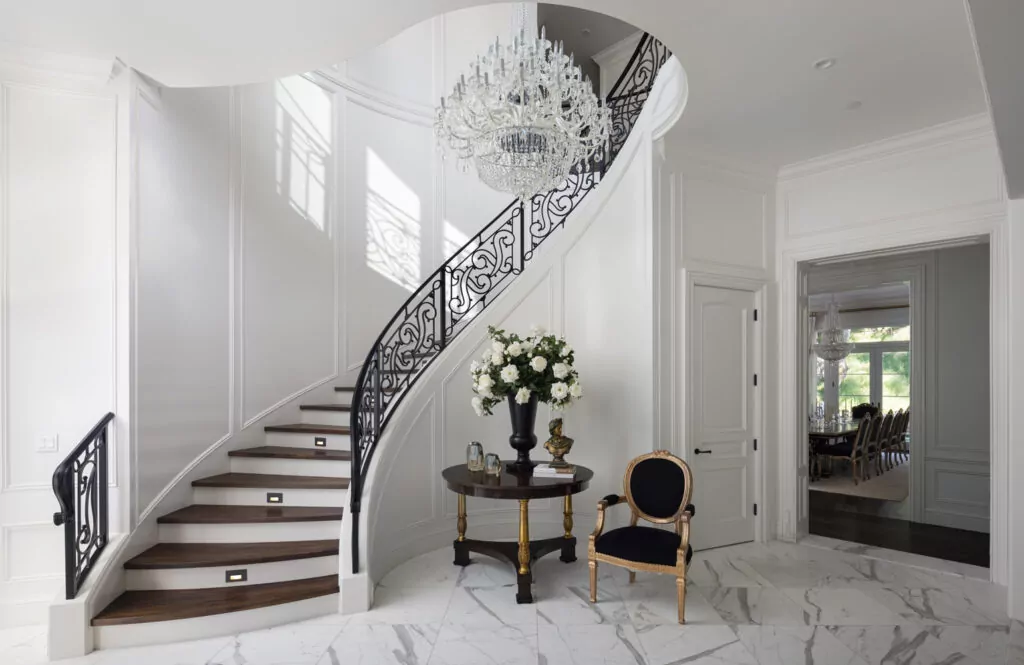
Natural stone flooring includes materials such as marble, limestone, and travertine, each offering unique patterns and textures formed over time. These materials are often associated with more refined, high-end interiors due to their organic variation and visual depth.
But that natural quality comes with responsibility. Stone is porous. It responds to moisture, to spills, and to the conditions around it. It requires sealing, care, and ongoing attention to maintain its appearance over time.
Like hardwood flooring, it doesn’t resist change—it records it. Patina develops. Surfaces soften slightly. The floor begins to reflect how it has been lived on.
In the right setting, that evolution feels intentional. It adds depth rather than wear.
Carpet
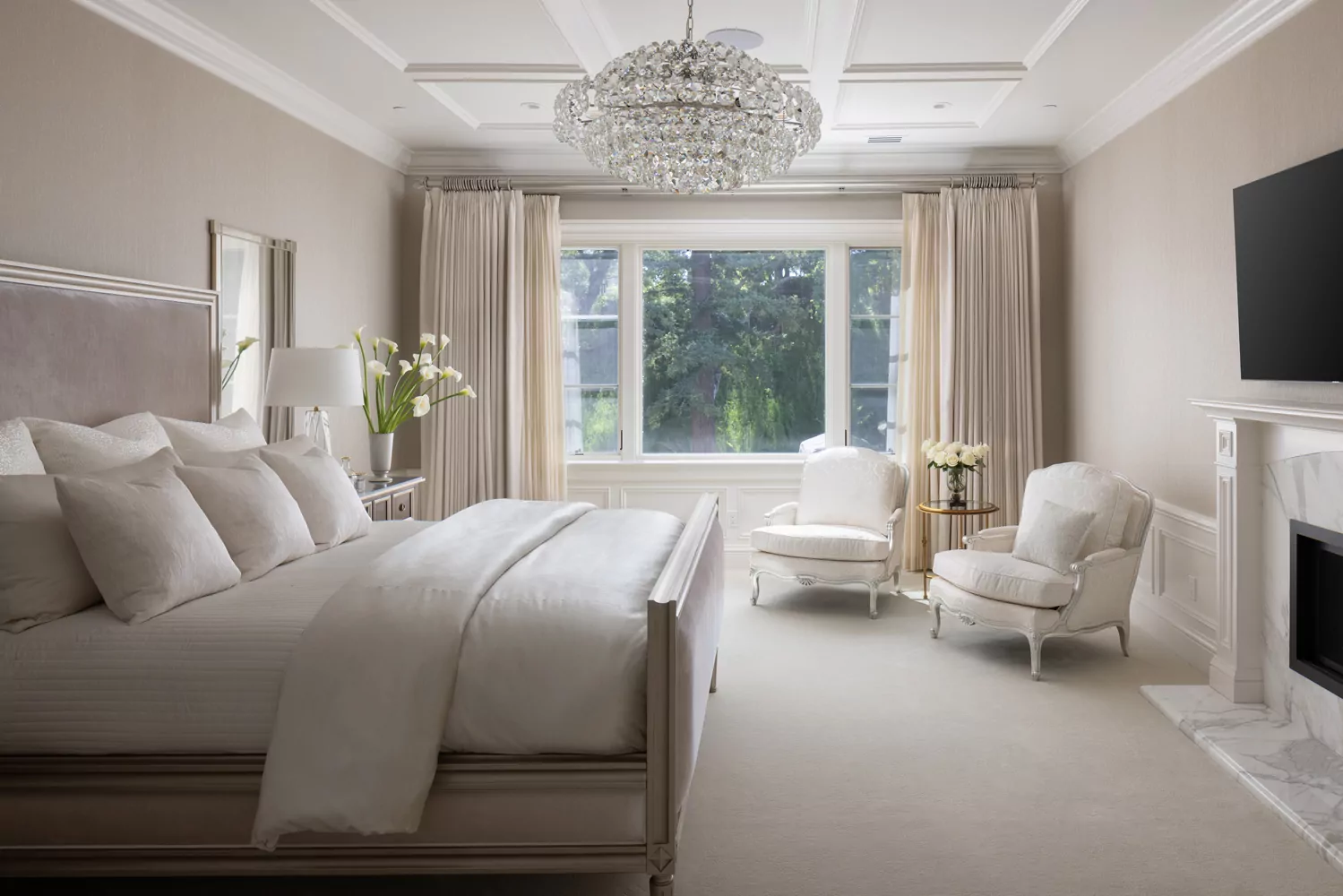
Carpeting offers a distinctly different experience compared to hard surfaces. It provides warmth, softness underfoot, and sound absorption, making it especially valuable in bedrooms and multi-level homes where noise reduction is important.
Carpeting performs especially well in colder climates, where warmth underfoot becomes a daily comfort rather than a luxury. It also plays a significant role in acoustics, reducing sound from footsteps, voices, and activity, which can be especially valuable in family homes.
That sense of softness is what draws people to it. Underfoot, it adds warmth in a way no hard material can replicate. In bedrooms, especially, it changes the experience of the space. Mornings feel quieter, and movement through the space feels more relaxed. In multi-level homes, it also carries a practical advantage. Sound doesn’t travel the same way, which subtly changes how spaces relate to each other.
At the same time, carpeting requires more upkeep. It tends to collect dust, allergens, and moisture, making it more difficult to clean than hard surfaces. It also has a shorter lifespan compared to materials like hardwood or tile.
This is part of why preferences have shifted. Many homes now lean toward hard surfaces for their clarity and ease of maintenance, particularly among pet owners who value how easily these materials can be cleaned, with rugs layered in to introduce softness where needed.
Still, carpeting hasn’t disappeared. It has simply become more intentional. Used where comfort matters most, where quiet is valued, and where the feeling of the space outweighs the need for long-term durability.
The Comparisons That Matter Most
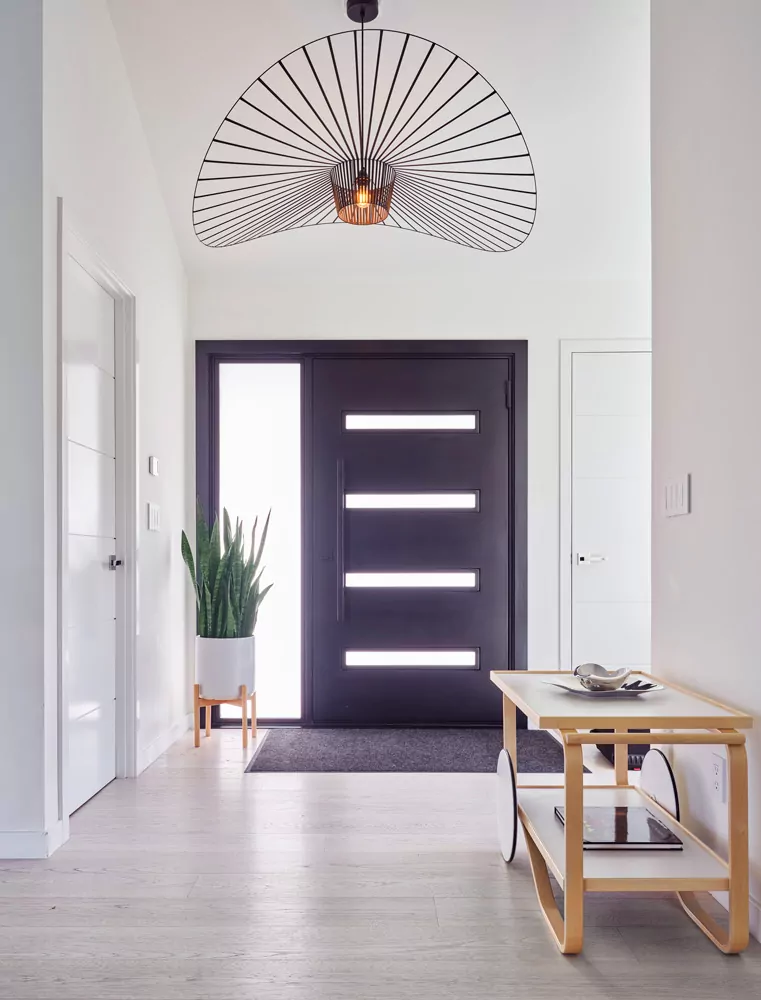

Once materials are understood individually, the decision shifts to how they compare. This is where most homeowners pause, comparing options side by side, trying to understand not just what each material is, but how it will perform in the same space.
These comparisons are often where decisions are clarified. Not because one option is definitively better, but because the differences begin to reveal what matters most in the context of a specific home.
What makes this stage important isn’t just performance or cost. It’s clarity. It’s about understanding which differences matter enough to live with every day.
A. Hardwood vs Engineered Wood Flooring
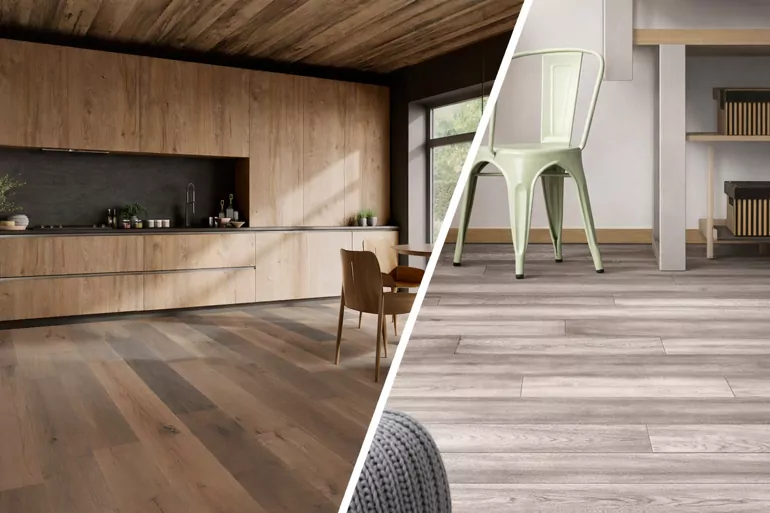
The difference between hardwood vs engineered wood flooring is less about how they look and more about how they behave over time.
Hardwood flooring responds to its environment, expanding and contracting with changes in humidity and temperature. Engineered wood flooring is built to limit that movement, offering greater stability in spaces where conditions fluctuate.
This distinction becomes more noticeable in everyday use. Hardwood flooring can be refinished multiple times, allowing it to adapt and evolve over decades. Engineered wood flooring, depending on the thickness of its top layer, offers less refinishing flexibility but maintains a more consistent performance in the short to medium term.
The tradeoff is clear. Hardwood flooring favors longevity and the ability to evolve. Engineered wood flooring favors stability and predictability.
B. Hardwood vs Tile Flooring
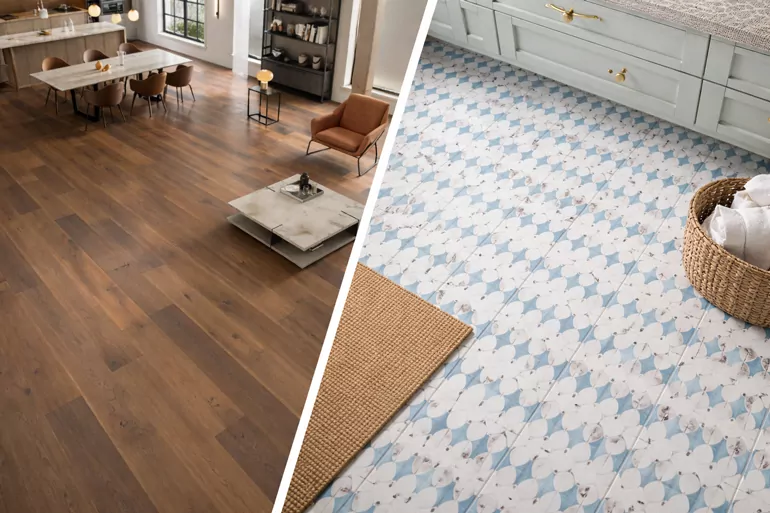
The comparison between hardwood vs tile flooring often comes down to how a space is expected to function.
Hardwood flooring brings warmth and a sense of continuity, making spaces feel more connected and comfortable over time. Tile flooring, by contrast, prioritizes durability and moisture resistance, maintaining its condition even in environments with constant exposure to water and wear.
This difference becomes especially relevant in kitchens and bathrooms. Tile flooring performs reliably in moisture-prone spaces, while hardwood flooring requires more controlled conditions to maintain its integrity.
There is also a physical contrast. Hardwood offers a slightly softer, warmer surface underfoot, while tile flooring remains firm and cool. One supports comfort, the other supports resilience.
The decision is rarely about preference alone. It’s about whether the space demands durability or comfort as its primary function.
C. Hardwood Flooring vs Carpet
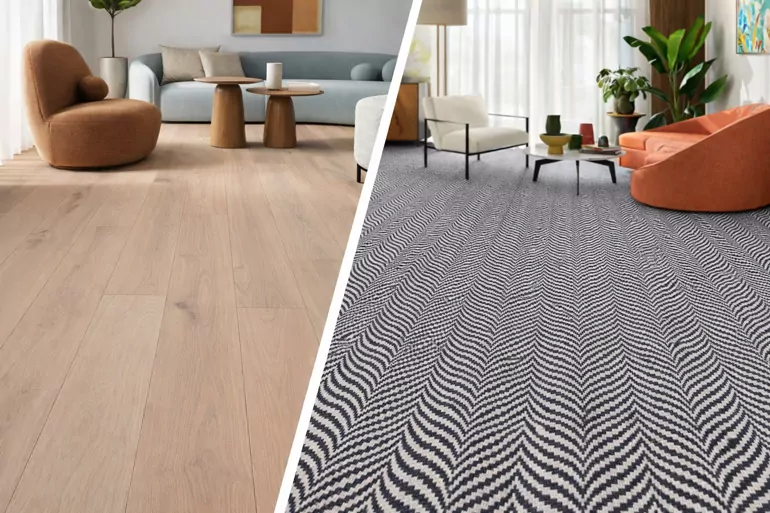
The comparison between hard surfaces and carpeting shifts the focus from durability to comfort, maintenance, and daily experience.
Hard flooring, including tile flooring, SPC flooring, and wood flooring, is easier to maintain and better suited for high-traffic or pet-friendly homes. It resists wear, sheds debris, and supports a cleaner, more structured environment. This is one reason many homeowners, particularly those considering the best flooring for dogs, gravitate toward hard surfaces.
Carpeting offers a different set of advantages. It absorbs sound, softens movement, and creates a quieter, more contained environment. In bedrooms and private spaces, that comfort can outweigh the need for long-term durability.
The tradeoff lies in upkeep and lifespan. Carpeting requires more maintenance, is more prone to staining, and typically wears out faster than hard flooring.
Investment Considerations
Flooring is not only a design decision. It’s also an investment over time. Materials like hardwood flooring and natural stone flooring often carry a higher upfront cost, not only in material but also in installation. But they tend to offer long-term value through durability, longevity, and timeless appeal.
Other options, such as SPC flooring and carpeting, may come with lower initial costs, but differ in lifespan and may require more frequent replacement. In this way, the right choice is not just about what is spent at the beginning, but how the material performs and holds its value over time.
It’s not about choosing one over the other. Most homes rely on a combination—using hard flooring where durability and ease of maintenance matter most, and carpeting where comfort and quiet are the priority.
For a simplified overview, the differences can be summarized as follows:
| Feature | Tile Flooring | Hardwood Flooring | Engineered Wood Flooring | Carpet |
| Durability | Extremely durable | Durable but can scratch | Durable with added stability | Moderate, wears over time |
| Water Resistance | Waterproof | Low | Moderate to high | Low |
| Comfort | Hard, cool surface | Warm and natural | Slightly softer, more stable | Soft and cushioned |
| Maintenance | Low maintenance | Requires upkeep/refinishing | Easier upkeep than hardwood | Higher maintenance, can stain |
| Acoustics | Reflective | Moderate | Moderate | Absorbs sound, reduces noise |
| Best For | Bathrooms, kitchens | Living spaces, bedrooms | Whole-home flexibility | Bedrooms, low-traffic areas |
| Cost Range | Moderate to high | High | Moderate to high | Low to moderate |
| Installation | Labor-intensive | Skilled installation required | Easier than hardwood | Quick and straightforward |
Room-by-Room Flooring Guide

With the above comparisons in mind, the next step is applying those insights to specific spaces within the home. Each room places different demands on flooring, from moisture and durability to comfort and visual continuity.
Kitchen Flooring
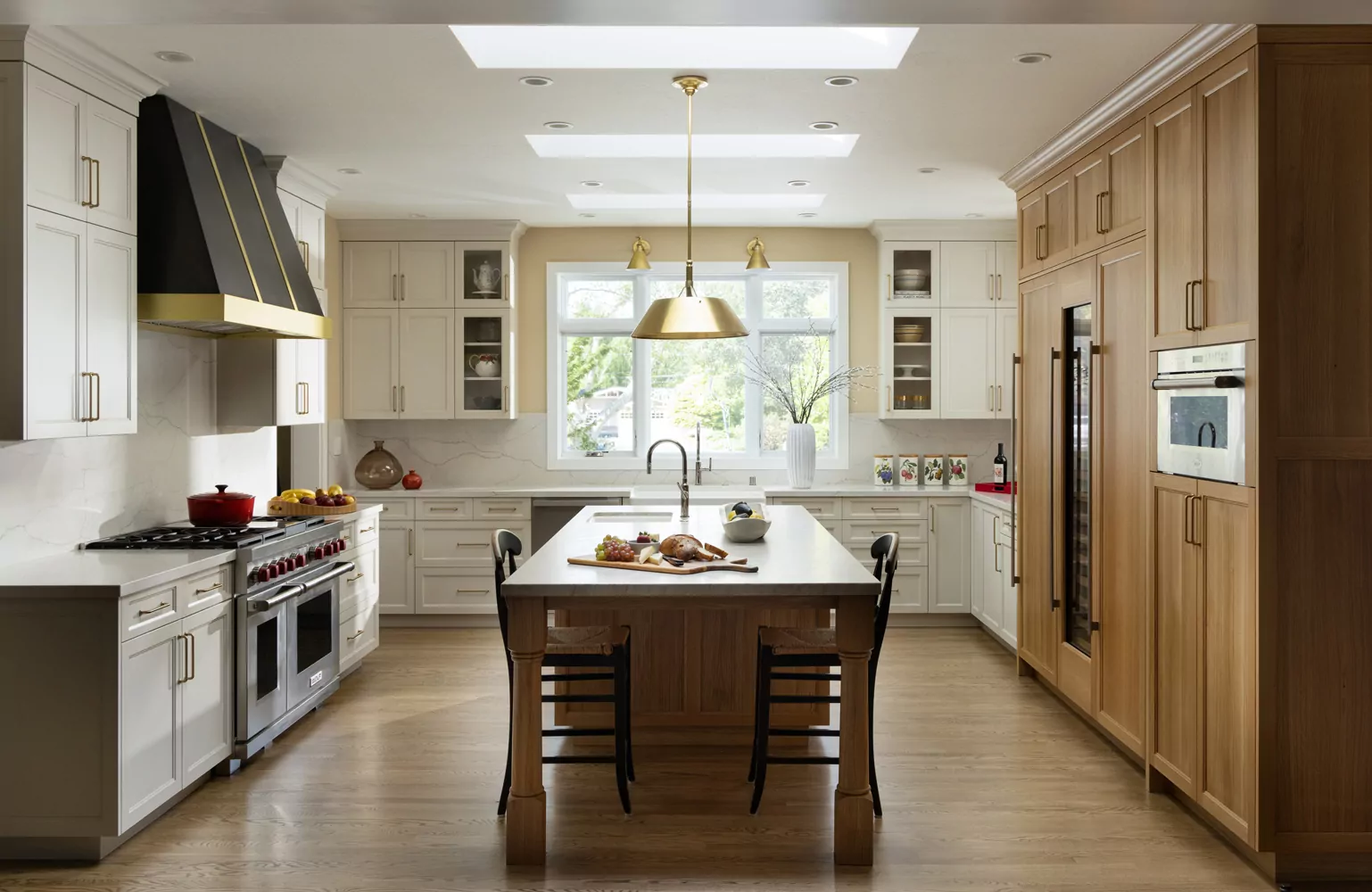
The kitchen is one of the most active spaces in the home. Movement is constant, surfaces are tested, and the floor becomes part of that daily rhythm.
Kitchen flooring needs to handle that intensity without feeling disconnected from the rest of the home. Materials like tile flooring, SPC flooring, and engineered wood flooring are often used because they balance long-term performance with overall design. Tile flooring holds up to spills and moisture with ease, while SPC flooring offers similar protection with a more forgiving, low-maintenance surface. Engineered wood flooring introduces warmth, allowing the kitchen to feel more integrated with adjacent living spaces.
Bathroom Flooring
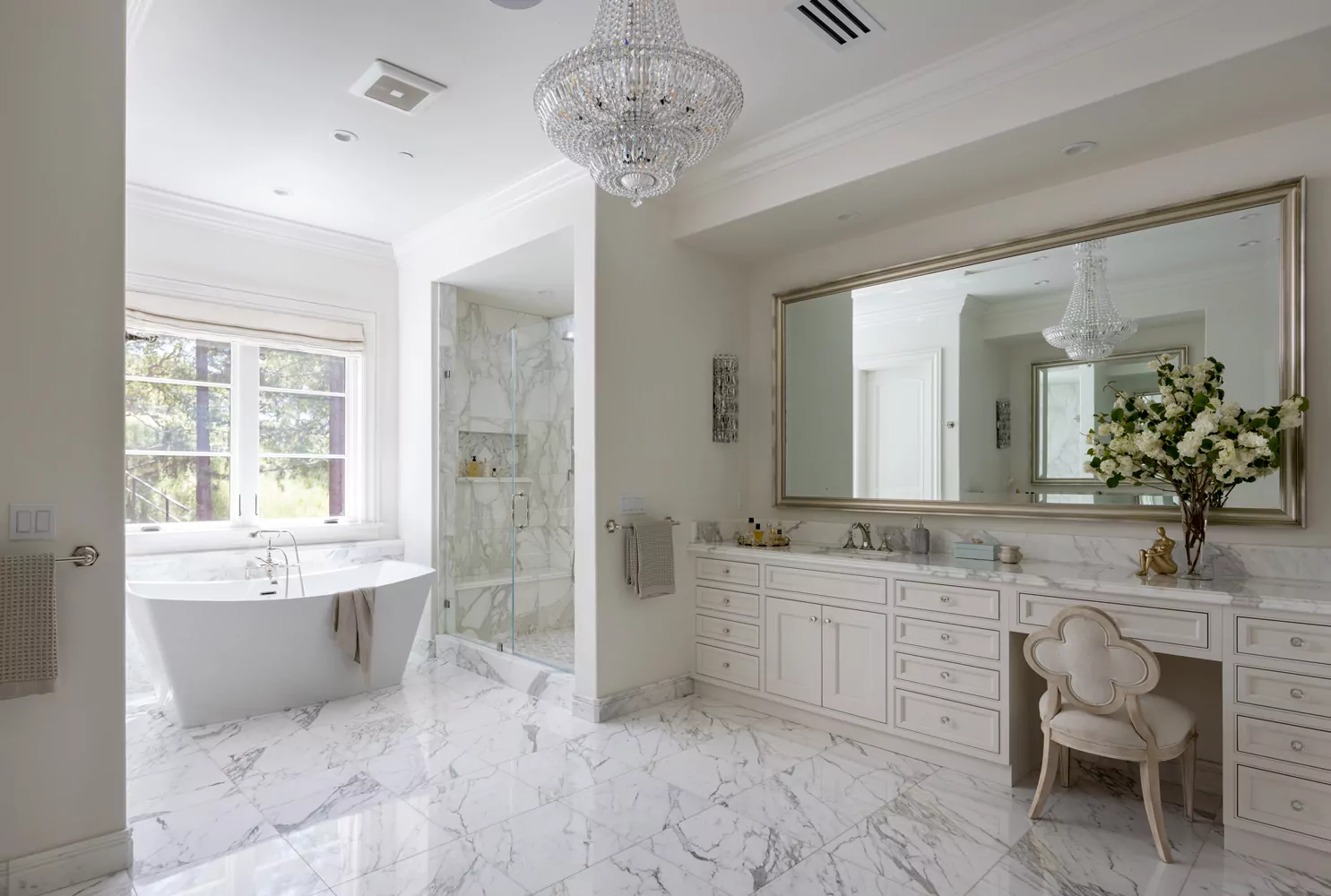
Bathrooms ask something different of a floor. Here, water is constant, and the environment is more controlled, more enclosed.
Bathroom flooring must prioritize water resistance and safety without losing its sense of intention. Tile flooring and natural stone flooring are often used in these spaces because they can withstand constant exposure to water while still contributing to the overall design. Tile flooring offers consistency and ease of maintenance, while natural stone flooring introduces texture and variation, giving the space more depth. There’s also a tactile quality to consider. Surface texture, slip resistance, and the way the floor feels underfoot all shape the experience of the space.
In powder rooms, however, the approach can differ. Because these spaces see less moisture, they often carry the same flooring as the surrounding areas, such as hardwood flooring, allowing for greater visual continuity across the home.
Living Room Flooring
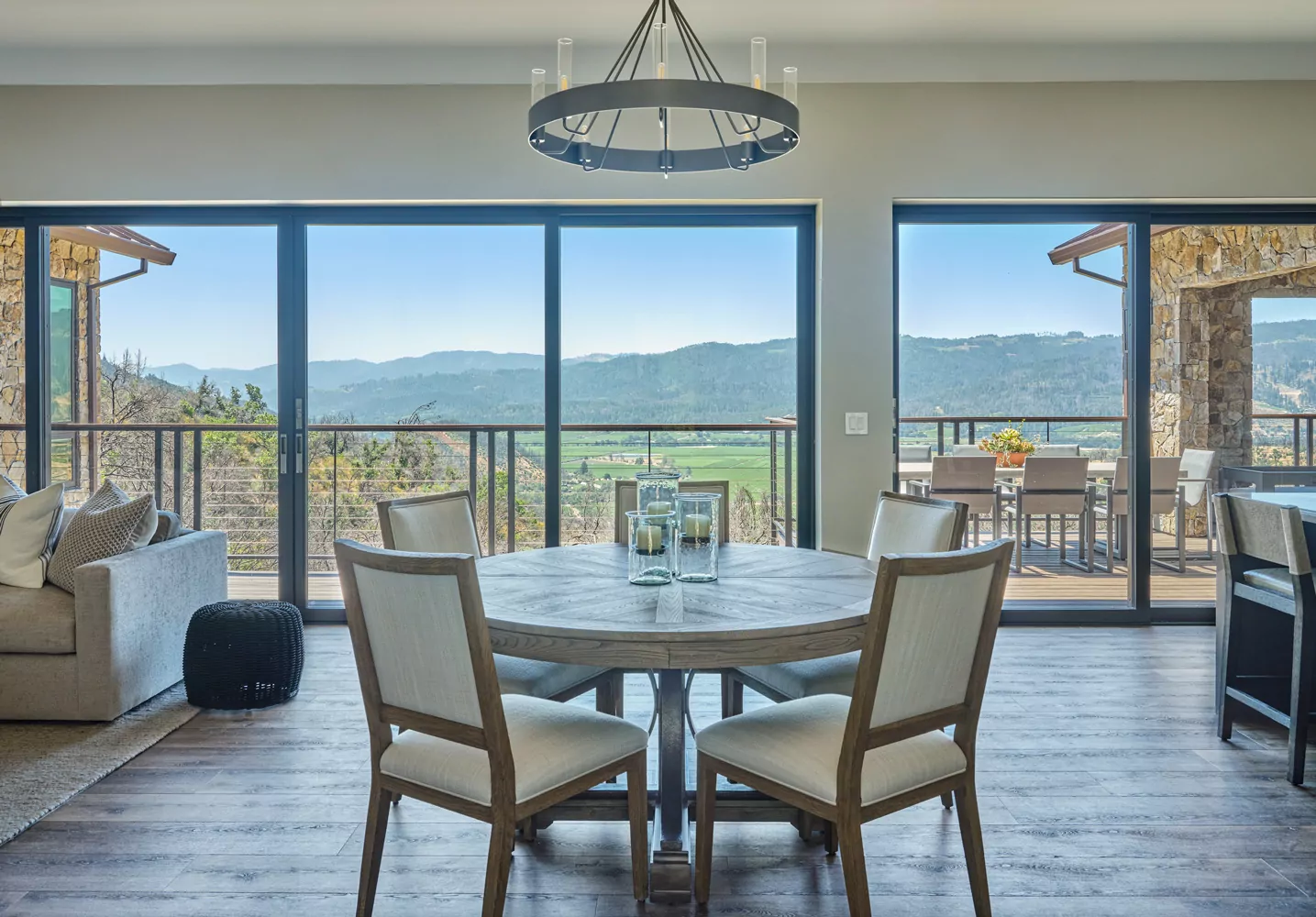
Living areas are where the home comes together. These are the spaces that carry movement, where people gather, pass through, and spend time throughout the day. Flooring here needs to support that rhythm while maintaining a sense of visual continuity.
Hardwood flooring and engineered wood flooring are often used in living areas for this reason. Their warmth and natural variation help connect spaces, especially in open-concept layouts where flooring often runs continuously across multiple areas, allowing the home to feel cohesive rather than segmented.
Rugs add another layer. They don’t replace the floor but work with it, defining areas, adding texture, and allowing softness to be introduced without committing to full coverage. In open-concept spaces, they can also help create subtle zones within a larger, continuous layout.
In these spaces, flooring plays a dual role. It must hold up to daily use while also shaping the overall atmosphere. The goal is not just durability, but a balance between performance and a sense of connection throughout the home.
Bedroom Flooring

Bedrooms are where the home slows down. These are more private spaces, where flooring is felt more than it is tested, and comfort becomes the primary focus.
Carpeting is often chosen in bedrooms for the softness it brings underfoot. It absorbs sound, softens movement, and creates a quieter, more contained environment. The effect is subtle but lasting—spaces feel calmer, more insulated, and more removed from the activity of the rest of the home.
Hardwood flooring and engineered wood flooring are also used in bedrooms, particularly when maintaining continuity across the home is a priority. Rugs are often used to introduce softness and warmth, allowing comfort to be added without covering the entire floor.
In bedrooms, the decision is less about durability and more about how the flooring supports rest, comfort, and the overall feeling of the space.
Basement Flooring
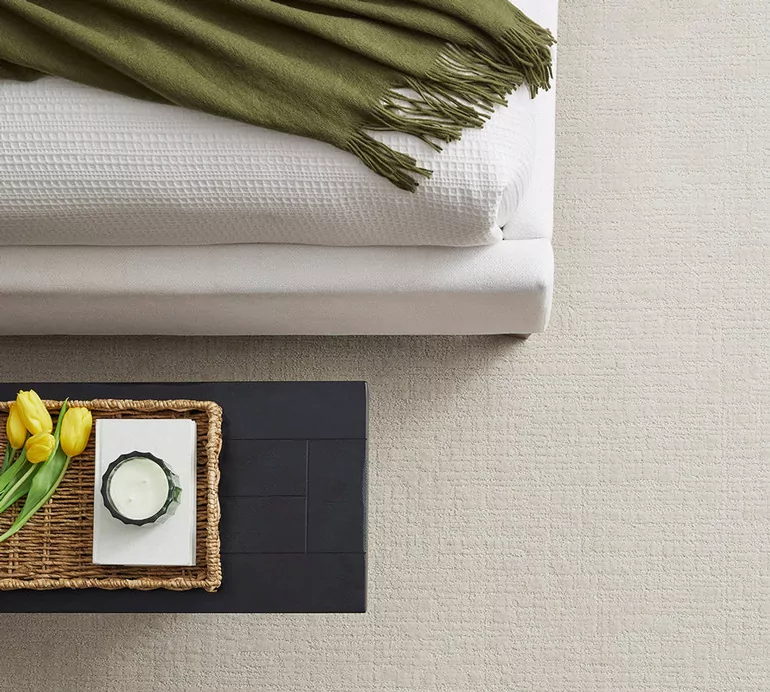
Basements exist in a different set of conditions. Light is limited, temperatures shift, and moisture is always a consideration, even when it’s not visible.
Basement flooring needs to respond to those conditions without drawing attention to them. Materials like SPC flooring, tile flooring, and engineered wood flooring are often used because they remain stable in environments where other materials might struggle.
At the same time, basements tend to feel cooler and more enclosed. This is where carpeting becomes a practical and emotional choice. It adds warmth, softens the space, and makes it feel more livable.
In basements, carpeting is often installed as carpet tiles rather than broadloom carpeting. This allows individual sections to be removed and replaced if moisture or flooding occurs, making it a more flexible solution in environments where conditions are less predictable.
No matter the material, proper subfloor preparation and moisture control are essential. In basements, what sits beneath the floor matters just as much as the surface itself.
Quick Reference: Best Flooring by Room
| Room | Recommended Flooring Options | Why It Works |
| Kitchen Flooring | Tile flooring, SPC flooring, engineered wood flooring | Balances durability, moisture resistance, and design continuity |
| Bathroom Flooring | Tile flooring, natural stone flooring | Provides water resistance, safety, and longevity |
| Living Areas | Hardwood flooring, engineered wood flooring | Adds warmth, comfort, and visual cohesion |
| Bedrooms | Hardwood flooring, engineered wood flooring, or carpeting, with rugs as an optional layer for added comfort and texture | Enhances comfort and softness underfoot |
| Basement Flooring | SPC flooring, engineered wood flooring, tile flooring, or carpet tiles | Handles moisture and temperature changes while adding warmth and comfort in cooler spaces |
Navigating Flooring Brands & Quality Levels at Luxe Home
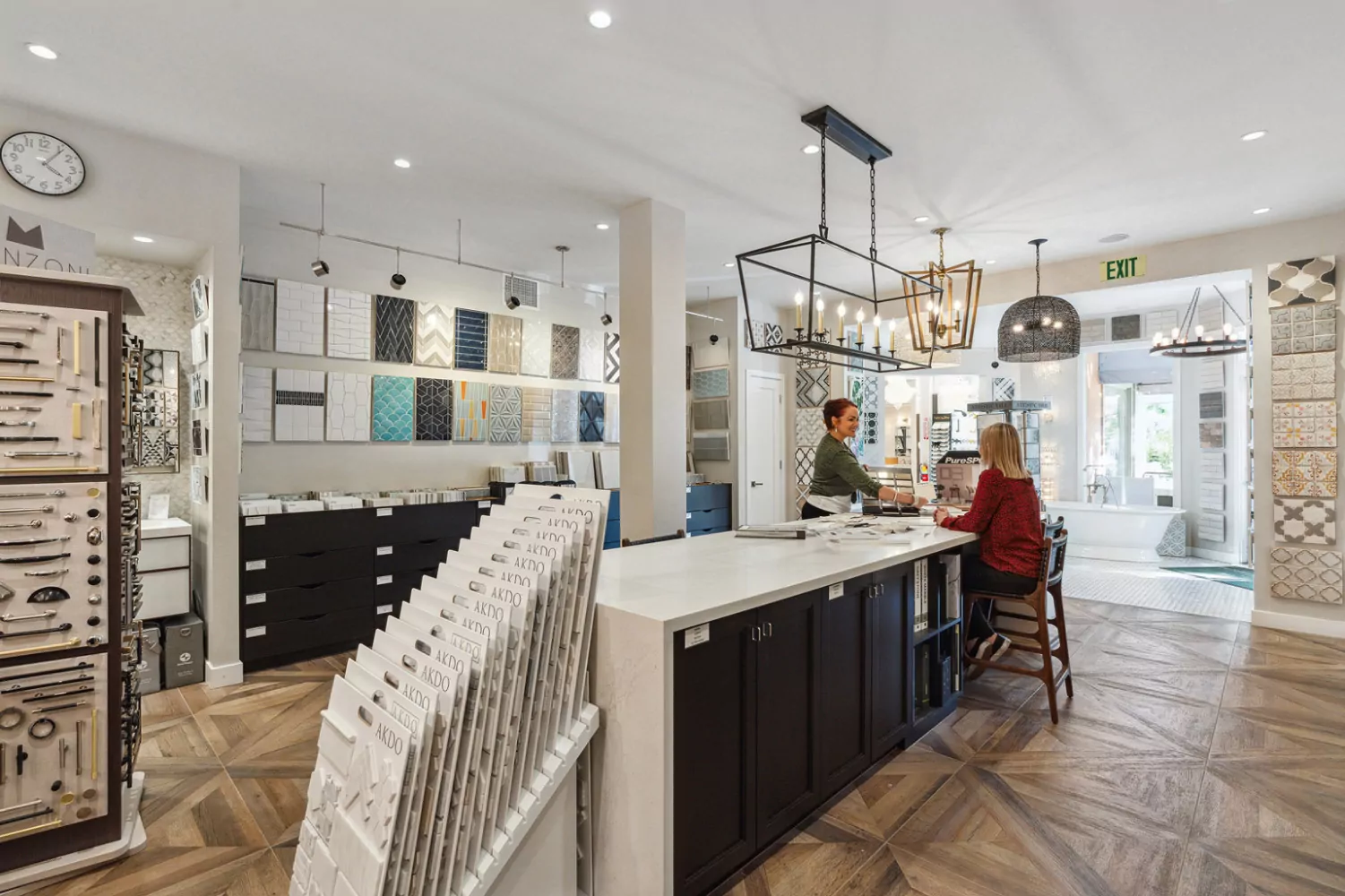
Once the right material is identified, the next layer of the decision often comes down to quality. Two floors may look similar at a glance, but differences in construction, finish, and craftsmanship tend to reveal themselves over time.
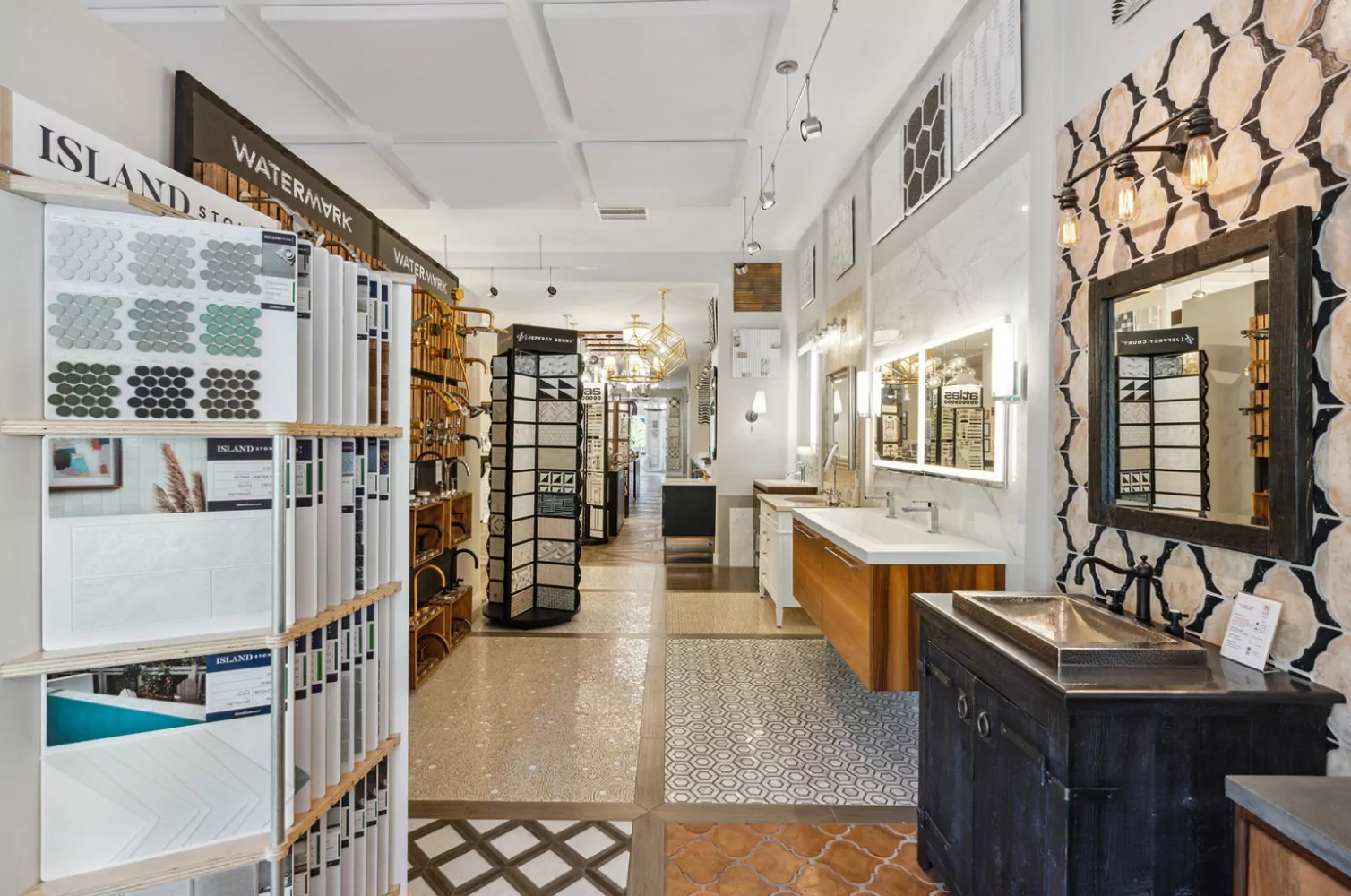
This is where flooring brands begin to matter. At Luxe Home, the focus is less on volume and more on selection. Materials are chosen with intention, allowing homeowners and designers to compare the subtle differences in quality that aren’t always visible at first glance.
These differences become more apparent when materials are viewed side by side, which is where a showroom like Luxe Home plays an important role. A few key indicators tend to define higher-quality flooring:
- The depth and consistency of the finish
- The stability of the construction
- The way the material responds to wear over time
- The level of craftsmanship behind each piece
These details may not stand out immediately, but they shape how a floor performs and feels years after installation.
| Brand | Category | Design Perspective | Ideal Application |
| Fabrica | Carpet & rugs | Refined textures, rich color palettes | Bedrooms, layered interiors |
| Masland | Carpet & rugs | Heritage craftsmanship, modern sensibility | Custom rugs, softening spaces |
| Pravada Floors | Hardwood | European-inspired, contemporary finishes | Clean, modern interiors |
| Craft Floor | Hardwood | Organic textures and tonal warmth | Natural, layered palettes |
| Urban Floor | Hardwood | Versatile, design-forward wood collections | Transitional and modern homes |
| Republic Floor | SPC / performance | Durable, high-performance surfaces | Whole-home continuity, high traffic |
| Carlisle Wide Plank Flooring | Wide plank hardwood | Architectural scale, timeless craftsmanship | Luxury residences |
| Fabrica (Hardwood) | Hardwood | Elevated finishes and refined detail | Cohesive, high-end interiors |
| Tabarka Studio | Tile | Handcrafted, artistic tile design | Feature floors, statement spaces |
FAQ Section
What is the most durable flooring?
Tile flooring, SPC flooring, and engineered wood flooring are among the most durable options, offering strong resistance to wear, moisture, and daily use.
Hardwood vs engineered wood flooring—which is better?
Hardwood flooring offers longevity and refinishing potential, while engineered wood flooring provides greater stability in moisture-prone or fluctuating environments—making each suited to different areas of the home.
What is the best flooring for dogs?
SPC flooring and tile flooring are ideal for pet-friendly homes due to their scratch resistance and easy maintenance, while engineered wood flooring can work with the right finish.
What is the best kitchen flooring?
Tile, SPC, and engineered wood flooring are among the most popular options for kitchens due to their durability, moisture resistance, and ability to stand up to daily use and spills.
What is the best bathroom flooring?
Tile flooring and natural stone flooring are the best options for bathrooms, offering strong water resistance, durability, and long-term performance in moisture-prone environments.
What flooring adds the most value to a home?
Hardwood flooring is often considered the most valuable due to its timeless appeal and long lifespan, especially in main living areas. At Luxe Home, this is frequently a foundational choice for creating cohesive, high-end interiors.
How do I choose between different flooring types?
Choosing between flooring types depends on balancing lifestyle, durability, and design goals, which is why experiencing materials in person—such as at Luxe Home—can help clarify the best fit for each space.
Is carpet still a good flooring option?
Carpeting is a good choice for bedrooms and low-traffic areas where comfort, warmth, and sound absorption are priorities. However, it requires more maintenance and has a shorter lifespan compared to hard surfaces like hardwood flooring or tile flooring.
What is the best flooring for basements?
Engineered wood flooring, SPC flooring, and tile flooring are often used in basements for their moisture resistance. However, carpeting is also a popular choice, as basements tend to feel colder and benefit from added warmth and softness underfoot. Carpet tiles can be especially practical, offering easier replacement and maintenance, while traditional carpeting is typically more affordable to replace than hardwood.
Final Thoughts: Choosing Flooring That Lasts
Choosing the right flooring is rarely about finding a single perfect option. It’s about understanding how each material supports the way a space is used.
The most successful decisions tend to feel aligned from the beginning. Not just visually, but in how it wears, how it’s maintained, and how it continues to feel years after it’s installed. What works in one space may not work in another, which is why taking a thoughtful, room-by-room approach often leads to more cohesive and lasting results.
In a curated flooring showroom like Luxe Home, these differences can be seen and felt more clearly, helping homeowners make decisions with confidence. Just as importantly, our in-store interior designers help guide that process, bringing clarity to material choices, ensuring selections feel cohesive within the larger design scheme, and assisting in ordering the right flooring for each space.
Over time, flooring becomes part of the rhythm of a home. It’s a foundation—one that shapes how a home looks, feels, and functions every day. Choosing it thoughtfully ensures it continues to do so for years to come.