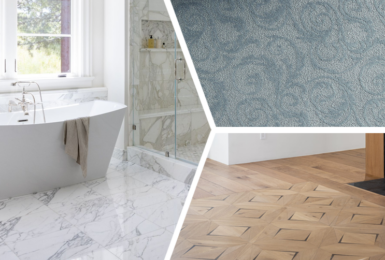
Luxury Bathroom Tile Ideas: A Designer’s Guide to Materials, Layouts & Finishes
Tile is one of the most visually influential surfaces in a bathroom. It can establish the room’s color palette, introduce texture and movement, define the shower, ground the floor, and shape how the entire space feels. But even a beautiful tile will not create a luxurious bathroom on its own.
The most successful bathroom tile ideas consider the tile in relation to everything around it: the proportions of the room, cabinetry, countertops, plumbing finishes, lighting, grout, and the transitions between surfaces. Material still matters, but so do scale, placement, finish, and the precision of the installation. Together, those decisions determine whether the tile feels thoughtfully integrated or simply applied to the room.
At Luxe Home, we approach bathroom tile design as part of a complete composition. A dramatic marble may become the visual anchor of a bathroom, while a quieter porcelain can create continuity across larger surfaces. A mosaic might introduce detail at the shower floor, while a handcrafted ceramic can bring texture to a smaller focal area. The goal is not to use more tile—or necessarily more expensive tile—but to understand what each surface should contribute to the overall design.
In this guide, we’ll look beyond individual products to explore how designers develop luxury bathroom tile ideas through material, scale, layout, pattern, finish, grout, and installation. We’ll also break down the considerations for bathroom floors, shower walls, shower floors, and mixed-material palettes so each selection supports a bathroom that feels cohesive, intentional, and lasting.
Quick Answer: What Makes Bathroom Tiles Look Luxurious?
Luxury bathroom tile comes from the way material, scale, placement, finish, grout, lighting, and installation work together—not simply from choosing an expensive tile. The most elevated results occur when the tile design responds to the bathroom’s architecture and coordinates intentionally with cabinetry, countertops, plumbing finishes, lighting, and adjacent surfaces.
What Makes Bathroom Tiles Look Luxurious?
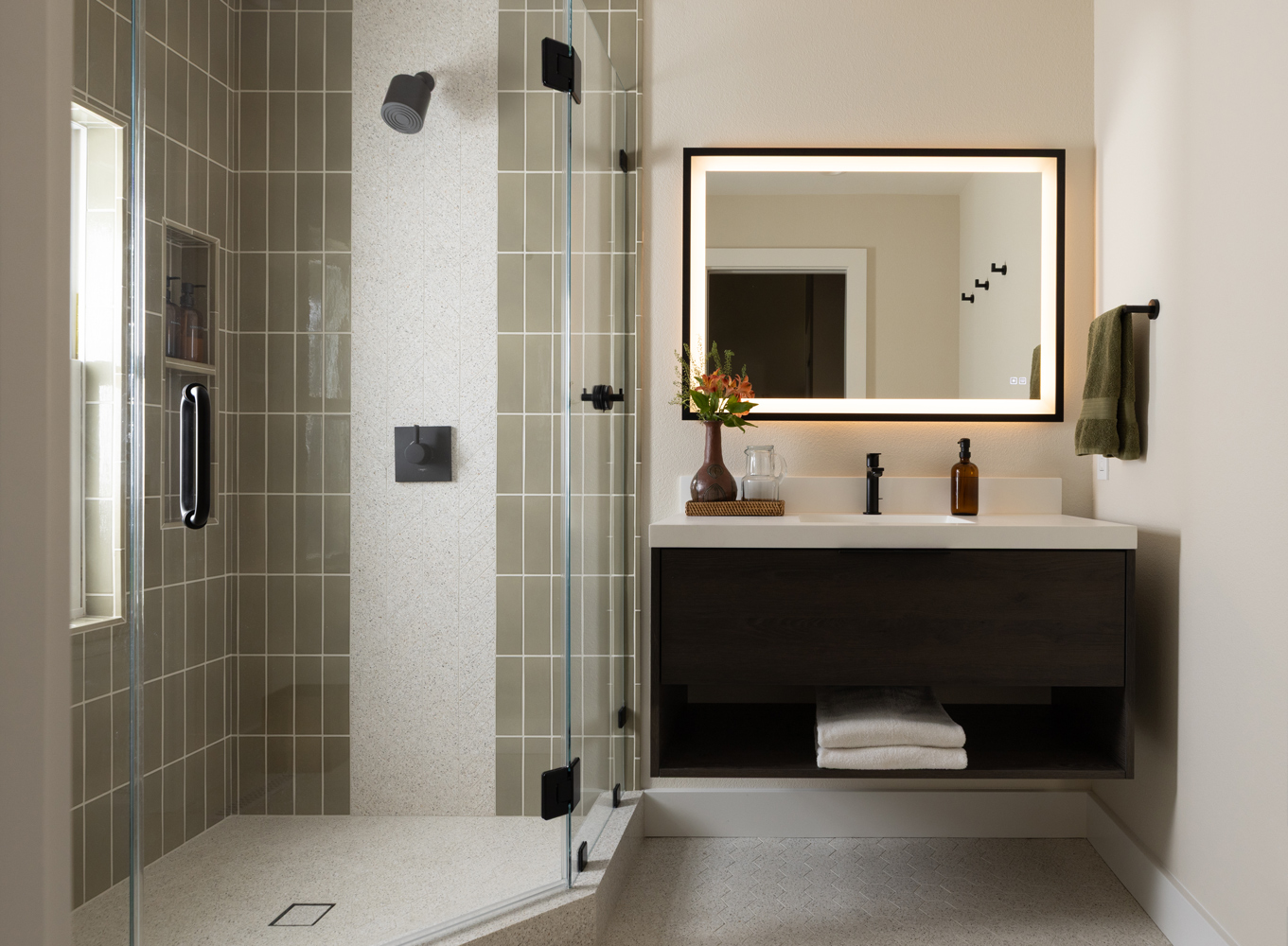
Luxury in a bathroom is less about choosing the most expensive material and more about how thoughtfully the tile is used. The strongest bathroom tile design feels connected to the architecture of the room, supports the surrounding finishes, and creates a clear visual hierarchy rather than asking every surface to compete for attention.
Material quality still matters. Natural stone brings authentic variation and movement, while well-made porcelain can offer convincing stone interpretations with greater visual consistency. Handcrafted ceramic and dimensional surfaces can introduce subtle shifts in glaze, texture, and depth. These qualities help a surface feel richer and more considered, but the material itself is only the starting point.
Scale and proportion are equally important. Large-format tile can create a calmer, more continuous look because there are fewer grout lines to interrupt the surface. Smaller-format tile can add texture, rhythm, and detail where those qualities are useful, such as on a shower floor or within a niche. Neither is inherently more luxurious. The right scale is the one that works with the dimensions of the room, the placement of fixtures, and the visual role that surface is meant to play.
Continuity between surfaces also contributes to a more refined result. Repeating a material, color family, or visual language from the bathroom floor into the shower or other tiled areas can reduce visual breaks and help the room feel more cohesive and intentionally designed. This does not mean every surface needs to match; rather, the materials should relate to one another in a way that feels deliberate.
Visual restraint matters, too. Some of the most successful luxury bathroom tile ideas rely on a limited palette. If a marble has strong veining, the surrounding tile may need to become quieter. If a patterned floor is the focal point, the shower walls can support it with a simpler surface. When every tile is designed to make a statement, the room can quickly feel busy. Luxury often comes from knowing where to create interest and where to let the eye rest.
Finish changes the mood of tile as much as color or pattern. Polished surfaces reflect more light and can feel formal or crisp, while honed and matte finishes tend to read as softer and more understated. Textured surfaces add tactile depth and can make a simple palette feel more layered. Because finishes respond differently to daylight, sconces, recessed lighting, and vanity lighting, they should be considered within the actual lighting conditions of the bathroom whenever possible.
Then there is precision in the details. Grout color and joint width affect how clearly each tile is defined. Balanced cuts can make a wall or floor feel intentional, while narrow or irregular pieces at visible edges can distract from an otherwise beautiful material. Edge treatments, niches, corners, drains, and transitions between surfaces all influence the finished composition. These details are easy to underestimate during the selection stage, yet they often determine whether the tile feels fully integrated into the room.
For homeowners looking for timeless bathroom tile ideas, this distinction is especially important. Timeless does not mean plain, and luxury does not require excess. A bathroom is more likely to age well when the tile responds to the architecture, the palette is controlled, and each material has a clear purpose.
The most luxurious bathroom tile, then, is not necessarily one specific material, size, or pattern. It is tile that has been chosen and placed with enough intention that it strengthens the entire room.
Choosing Bathroom Tile by Surface and Function

A designer approaches each bathroom surface differently because the floor, shower walls, shower floor, and feature areas all have their own visual and performance requirements. The goal is not to choose each tile independently, but to give every surface a clear role while making sure the materials still work together as one composition.
Bathroom Tile by Surface: Quick Reference
| Bathroom Zone | Materials to Consider | Main Design Priority | Key Considerations |
| Main bathroom floor | Porcelain, marble, natural stone, appropriate floor-rated ceramic | Establish the visual foundation of the room | Scale, traction, maintenance, grout, transitions, balanced cuts |
| Shower walls | Porcelain, marble, natural stone, appropriate ceramic | Create continuity and architectural presence | Wet-area suitability, format, veining, pattern, full-height application |
| Shower floor | Mosaic porcelain, appropriate stone mosaics, other wet-area-rated tile | Balance drainage, traction, and visual continuity | Smaller scale, slope, grout joints, drain location, product specifications |
| Niches, benches, and curbs | Field tile, mosaic, slab, coordinating stone or porcelain | Integrate functional details into the larger composition | Grout alignment, edges, transitions, material continuity |
| Vanity or feature wall | Ceramic, marble, mosaic, porcelain, dimensional tile | Add texture or a controlled focal moment | Lighting, mirror placement, pattern, height, visual hierarchy |
| Tub surround | Marble, porcelain, ceramic, natural stone | Reinforce the architecture around the tub | Full-height vs. partial tile, edges, transitions, relationship to floor and shower |
The Main Bathroom Floor
Bathroom floor tile often sets the visual foundation for the room, so material, scale, pattern, grout, and the way the floor meets cabinetry and adjacent surfaces all matter.
Porcelain offers broad design flexibility and is available in many sizes, finishes, and stone-inspired looks. Marble and other natural stones bring genuine variation and character, while some ceramic products are also suitable when specifically rated for floor use. There is no single best tile for a bathroom floor; the right choice depends on the look you want, the product’s intended use, maintenance expectations, surface characteristics, and how the floor supports the rest of the design.
Large-format tile can create a calmer, more continuous surface because there are fewer grout lines, but the room dimensions and resulting cuts still need to work with the format. Patterned floors, such as checkerboard, geometric stone, mosaics, or decorative porcelain, can become a strong focal point and are often most successful when surrounding surfaces remain quieter.
Shower Walls and Shower Floors
The shower is one of the largest tiled areas in many bathrooms, which makes it a key part of the room’s overall composition. Many bathroom shower tile ideas begin with the walls, where large-format porcelain can create a clean backdrop, marble or natural stone can introduce movement, and appropriate ceramic can add glaze, color, or texture.
The best tile for shower walls is one that balances the desired look with wet-area suitability, maintenance expectations, format, and installation requirements. Extending tile to the ceiling can also create a more complete architectural envelope and reduce visual breaks, though the right height should always suit the room.
The shower floor requires a different set of considerations. Smaller formats and mosaics are commonly used because they can more easily accommodate the changing planes needed for slope and drainage. The best tile for a shower floor should be selected based on the manufacturer’s wet-area specifications, surface characteristics, traction, grout layout, drainage requirements, and how well it coordinates with the rest of the bathroom.
A shower-floor mosaic might repeat the color of the main floor, echo the veining of the shower walls, or introduce a subtle change in scale. The goal is to meet the functional demands of the shower without making it feel visually disconnected.
Niches, Benches, Curbs, and Feature Areas
Smaller architectural details often reveal how carefully the tile has been planned. Niches, benches, and curbs should be considered early so grout lines, edges, transitions, and material changes feel intentional rather than added later.
Vanity and feature walls can also support a more expressive tile, such as a dimensional ceramic, mosaic, stone, or richly glazed surface. These areas work best when there is a clear visual hierarchy: if one wall becomes the focal point, the floor and shower may need to remain more restrained.
Choosing tile by surface and function allows each area to do what it needs to do while still contributing to the same overall design. The floor can ground the room, the shower can reinforce the architecture, and the smaller details can tie the composition together.
Bathroom Tile Materials and the Kind of Luxury They Create

Material influences the character of a bathroom, but no single tile type defines luxury. The right choice depends on the mood you want to create, the surface where the tile will be used, and how it relates to the rest of the room.
Marble bathroom tile brings natural variation, veining, and movement that can make a bathroom feel architectural and distinctive. Honed finishes tend to feel softer and more understated, while polished marble is more reflective and formal. When the veining is pronounced, marble often works best as the visual anchor, supported by quieter surrounding materials.
Porcelain bathroom tile offers a more controlled and consistent look, with options ranging from large-format slabs to convincing stone interpretations. It works especially well in contemporary or spa-like bathrooms where visual continuity is important, and its broad range of formats and finishes makes it highly versatile across floors and walls.
Ceramic bathroom tile adds character through glaze, color, texture, and dimensionality. Handcrafted or intentionally varied ceramic surfaces can bring an artisanal quality to vanity walls, selected shower walls, niches, and other areas where a little more detail is welcome.
Natural stone bathroom tile includes materials such as marble, limestone, travertine, and slate, each with its own variation and texture. These materials can create a warm, grounded, organic feel, but suitability, finish, sealing, and maintenance should always be considered for the specific stone and application.
Mosaic bathroom tile introduces detail and rhythm at a smaller scale, making it useful for shower floors, niches, feature floors, borders, and other focused applications. Mosaics do not always need to act as a bold accent; using them in the same tonal family as the main tile can add depth while keeping the palette cohesive.
For a broader look at tile performance, maintenance, and material selection, see our Designer’s Guide to Choosing the Perfect Tile.
Marble vs. Porcelain for a Luxury Bathroom
| Consideration | Marble | Porcelain |
| Visual character | Naturally varied, organic, and one-of-a-kind | More controlled and consistent, with options that can closely interpret stone |
| Overall effect | Architectural, classic, natural, and highly individual | Refined, versatile, contemporary or transitional |
| Maintenance | Typically requires more consideration depending on finish and application | Generally easier to maintain |
| Design flexibility | Defined by the natural characteristics of the stone | Extensive range of formats, colors, textures, and stone interpretations |
| Consistency | Variation between pieces is part of the material’s character | Greater control over color and pattern consistency |
| Best fit | Natural character and authentic stone movement are priorities | Consistency, versatility, and easier upkeep are priorities |
The key distinction is simple: marble prioritizes natural variation and one-of-a-kind character, while porcelain offers greater consistency, broad design flexibility, and generally easier maintenance. Neither is inherently more luxurious; the stronger choice is the one that best supports the bathroom’s overall design.
Bathroom Tile Layout, Scale and Pattern


The bathroom tile layout has a major influence on how the room feels. Large-format tile can create a quieter, more continuous backdrop because there are fewer visible joints, while smaller formats introduce more rhythm and detail. The right scale depends less on the size of the bathroom than on how the tile relates to the room’s proportions, fixtures, grout lines, and resulting cuts.
Orientation also changes the visual effect. Horizontal stacked layouts can emphasize width, while vertical layouts draw the eye upward and can reinforce height. Running bond patterns offer a familiar, timeless rhythm, while herringbone introduces more movement and craftsmanship. None of these layouts is inherently better—the strongest choice is the one that supports the architecture and the overall design direction.
More graphic bathroom tile patterns, such as checkerboard or geometric layouts, can make a floor or feature area feel tailored and distinctive. Because these patterns carry more visual weight, they are often most effective when surrounding walls, cabinetry, and shower surfaces remain quieter.
Finally, layout should respond to the architecture of the room. Tile joints and pattern lines can align with vanity edges, shower openings, niches, windows, and tub surrounds so the installation feels intentional. Planning full and partial tiles in advance also helps avoid narrow cuts at highly visible edges, giving the finished bathroom a more balanced and refined appearance.
Mixing Bathroom Tiles Without Making the Room Feel Busy


Successful mixing bathroom tiles is less about how many materials you use and more about giving each one a clear role. A simple way to create that hierarchy is to think in terms of a dominant tile, a supporting tile, and an accent tile.
The dominant tile sets the tone. Usually used across a larger surface such as the bathroom floor or shower walls, this material establishes the room’s main color, movement, and visual character. If it has pronounced veining or pattern, the remaining selections should generally become quieter.
The supporting tile creates continuity. A second material can solve another surface while repeating something from the dominant tile—a warm undertone, vein color, texture, or finish. It should add dimension without introducing an entirely separate design direction.
The accent tile adds a controlled moment of detail. Mosaic, patterned, or handcrafted tile can bring personality to a shower floor, niche, vanity wall, or feature area, but it works best when it remains part of the hierarchy rather than becoming another competing focal point.
A few simple principles help keep the overall palette cohesive:
- Repeat a visual connection: Shared colors, undertones, finishes, or veining help different tiles feel related.
- Change scale before adding another color: A larger field tile paired with a smaller mosaic can add interest while keeping the palette restrained.
- Let one tile carry the strongest pattern: If the floor or marble already has significant movement, quieter surrounding surfaces create balance.
- Change one major variable at a time: Stronger pattern often benefits from simpler color, while a broader color palette usually works better with more restrained pattern.
The goal is not to make every tile match. It is to create enough connection that each material feels intentional, and enough restraint that the bathroom still reads as one cohesive design.
Finish, Grout and Installation Details That Elevate Bathroom Tile

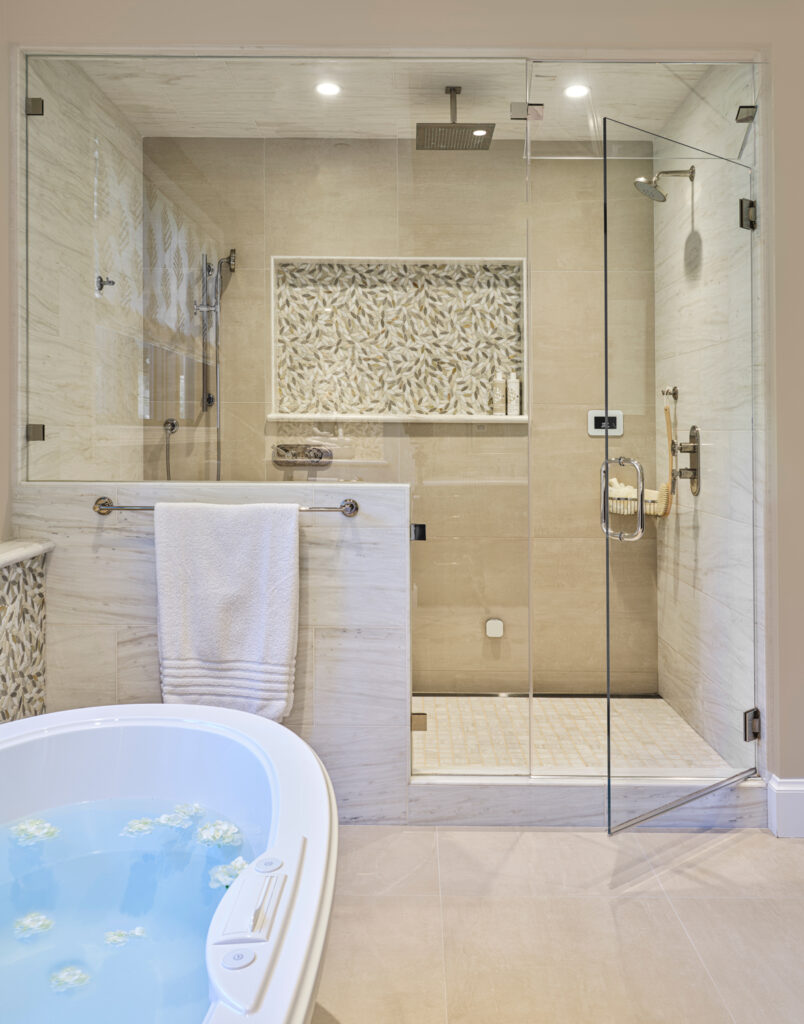
Once the material and layout are established, finish, grout, and installation determine how clearly that design comes through. These details may seem secondary during the selection process, but they have a significant effect on whether the finished tile feels polished, cohesive, and connected to the architecture of the bathroom.
Finish sets the mood. Polished tile reflects more light and can give stone or porcelain a crisp, luminous appearance. Honed surfaces have a softer, lower sheen that often feels quieter and more understated, while matte finishes reduce reflection and can work especially well in contemporary or spa-inspired bathrooms. Textured finishes add tactile depth, though the specific product should always be evaluated for its intended application, maintenance needs, and wet-area suitability.
Mixing finishes within the same color family can also create depth without adding another pattern or material. A honed floor paired with a more reflective wall surface, for example, can make the palette feel layered while preserving visual continuity. Lighting matters here, too: daylight, sconces, recessed lighting, and vanity lighting can all change how sheen, texture, veining, and color are perceived.
Grout is part of the design, not an afterthought. A grout color close to the tile can make the surface feel more continuous, while greater contrast draws attention to the tile shape and bathroom tile pattern. Joint width affects the rhythm as well—narrower joints can create a more streamlined appearance, while more visible joints can emphasize smaller formats, mosaics, or handcrafted character.
Installation is where precision becomes visible. Several details have an outsized impact on the final result:
- Balanced tile cuts: Planning where full and partial tiles will fall helps avoid narrow pieces at prominent edges and keeps the composition visually balanced.
- Vein direction: Marble and stone-look porcelain should be reviewed for how movement flows from one piece to the next, particularly across large or highly visible surfaces.
- Edges and corners: Mitered edges, trim profiles, slab pieces, and other finishing methods should be selected intentionally so niches, curbs, and exposed edges feel complete.
- Drains and plumbing locations: Coordinating drains, valves, and fixtures with the tile grid where practical can reduce awkward cuts and help those functional elements sit more naturally within the layout.
- Transitions between materials: Thresholds, tile-to-drywall edges, and changes between flooring or wall materials should be planned as part of the overall bathroom tile design, rather than resolved only during installation.
- Dry layouts and mockups: Reviewing prominent stone movement, pattern placement, and key cuts before permanent installation can reveal visual conflicts while there is still time to adjust them.
A beautiful tile can establish the character of the bathroom, but these finishing decisions determine how successfully that character is expressed. When sheen, grout, lighting, edges, cuts, and transitions all support the same design direction, the tile feels integrated into the room rather than simply applied to its surfaces.
Five Luxury Bathroom Tile Ideas

The strongest luxury bathroom tile ideas are not defined by one material or style. They come from deciding what role tile should play in the room—quiet backdrop, architectural statement, natural focal point, or crafted detail—and then supporting that direction consistently.
1. The Quiet Spa Bathroom
For a calm, restorative look, warm stone-look porcelain, tonal mosaics, and matte or honed finishes can create continuity without feeling flat. These spa bathroom tile ideas work especially well when contrast is kept low and texture does more of the visual work. Carrying related tones across the floor and shower can make the space feel more cohesive, while a smaller mosaic can introduce just enough detail where needed.
2. The Timeless Marble Bathroom
Marble brings natural movement and individuality, which is why it remains a strong choice for timeless bathroom tile ideas. Honed marble can feel softer and more understated, while a restrained mosaic or quieter supporting tile keeps the stone from competing with itself. The key is allowing the marble to lead while the surrounding materials reinforce its color and character.
3. The Monolithic Contemporary Bathroom
Large-format porcelain can create a streamlined, architectural effect when used across several surfaces. Fewer grout lines and subtle transitions allow the material to read as one continuous field rather than a collection of separate tiled areas. This approach works particularly well when cabinetry, plumbing, and lighting have clean lines that support the same sense of visual order.
4. The Artisan Bathroom
Handcrafted or intentionally varied ceramic tile can bring warmth, texture, and individuality to a bathroom without requiring a complicated material palette. A glazed wall tile paired with a quieter floor allows the variation in color and surface to become the focal point. The result feels collected and tactile rather than overly decorative.
5. The Tailored Statement Floor
A patterned marble, mosaic, stone, or porcelain floor can define the entire room when the surrounding surfaces are kept restrained. Checkerboard, geometric, or other structured bathroom tile patterns work best when the floor is clearly intended to lead. Simplifying the shower walls and other finishes gives the pattern space to make an impact without overwhelming the bathroom.
Making a Statement in Small Spaces
Powder rooms are especially well suited to expressive tile because a smaller footprint can support stronger pattern, color, or texture without overwhelming the space. A patterned floor, richly glazed ceramic, dimensional wall tile, or mosaic can create a memorable focal point, particularly when the vanity, lighting, and surrounding finishes remain restrained.
These approaches all reinforce the same idea: tile does not need to do everything. The most successful designs establish one clear direction, then use material, scale, pattern, and surrounding finishes to support it.
A Designer’s Process for Building a Complete Bathroom Tile Palette

A cohesive bathroom tile palette usually begins with the overall design direction—not with a single tile sample. Designers work from the character of the room outward, making each selection in relation to the next so the finished bathroom feels considered rather than assembled piece by piece.
1. Define the design character.
Start with the feeling the bathroom should have: spa-like, organic, tailored, contemporary, timeless, or artisanal. That direction becomes the filter for later decisions about color, material, pattern, and finish.
2. Choose the anchor material.
The tile with the greatest visual presence often sets the tone for the room. It may be a strongly veined marble, a large-format porcelain, a patterned floor, or a handcrafted ceramic. Once that anchor is established, the supporting materials can respond to its color, movement, and scale instead of competing with it.
3. Assign materials by zone.
The main floor, shower walls, shower floor, niches, tub surround, and vanity wall should be considered together. Each area has different practical requirements, but visually they should still belong to the same palette. This is where decisions about dominant, supporting, and accent tile become especially useful.
4. Resolve scale and layout.
Tile size, direction, pattern, grout alignment, and architectural relationships should be determined before adding more decorative elements. A simple palette can feel highly customized when the bathroom tile layout is well proportioned and aligned with features such as vanities, niches, windows, and shower openings.
5. Finalize finish and grout.
Honed, polished, matte, and textured surfaces can change how the same color or material reads in the room. Grout color and joint width also influence whether the tile feels continuous, graphic, handcrafted, or architectural, so both should be reviewed alongside the tile itself.
6. Plan transitions and installation details.
Edges, thresholds, niches, drains, plumbing locations, and prominent cuts should be resolved before installation. These details affect how one material meets another and whether the finished tile feels integrated with the architecture.
7. Review the complete bathroom palette.
Tile should be evaluated alongside cabinetry, countertops, plumbing finishes, lighting, paint, wallcoverings, and adjacent flooring. A material that looks beautiful on its own may read differently once it is placed next to warm wood, polished metal, painted cabinetry, or a contrasting countertop.
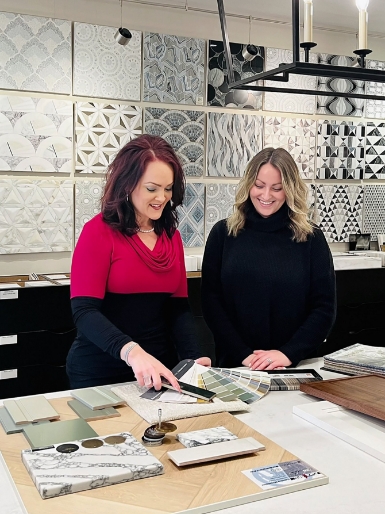
At Luxe Home, our in-store designers help clients compare these elements together so the tile supports the larger bathroom design rather than becoming an isolated selection. Seeing materials side by side makes it easier to refine undertones, contrast, texture, and scale before the final palette is set.
The result is a bathroom where each tile has a purpose—and every surface contributes to the same visual story.
Explore Bathroom Tile Brands at Luxe Home

Luxe Home brings together respected tile brands offering natural stone, porcelain, ceramic, mosaics, handcrafted surfaces, and decorative collections. This range makes it possible to explore very different bathroom tile ideas—from quiet, spa-like surfaces to patterned floors and artisan details—while keeping the overall bathroom design cohesive.
Our in-store designers are available to help homeowners and trade professionals compare materials, formats, finishes, colors, and applications. Just as importantly, tile can be considered alongside cabinetry, countertops, plumbing fixtures, lighting, and other finishes that will ultimately shape how the bathroom looks and feels.
Seeing tile in person can also reveal qualities that are difficult to judge on a screen. Veining, glaze variation, texture, sheen, scale, and undertones often become much clearer when samples are viewed together, making it easier to understand how different selections will interact before final decisions are made.
Bathroom Tile Brands at Luxe Home
| Brand | What They Offer |
| AKDO | Natural stone, porcelain, mosaics, and sophisticated decorative surfaces suited to both contemporary and timeless bathrooms. |
| Artistic Tile | Luxury natural stone, glass, mosaics, and intricate patterns with a strong emphasis on craftsmanship and statement design. |
| Island Stone | Natural stone, pebble mosaics, glass, and textured surfaces with an organic quality well suited to spa-inspired bathrooms. |
| Jeffrey Court | Ceramic, porcelain, stone, and mosaics across classic, transitional, and contemporary styles. |
| SomerTile | Ceramic and porcelain tile with decorative, patterned, vintage-inspired, and Mediterranean-influenced options. |
| Sonoma Tilemakers | Handcrafted ceramic, stone, and glass tile known for glaze variation, color, and artisanal character. |
| Tabarka Studio | Handcrafted terracotta and decorative tile with distinctive pattern, texture, and old-world character. |
FAQs About Bathroom Tile Ideas

What is the best tile for a bathroom floor?
The best tile for a bathroom floor depends on the look, maintenance expectations, finish, and product specifications. Porcelain is a versatile choice for many bathrooms, while marble and other natural stones bring distinctive variation and character. Whatever the material, it should be rated for floor use and appropriate for the intended application.
What is the best tile for shower walls?
The best tile for shower walls is one that combines wet-area suitability with the visual direction of the bathroom. Large-format porcelain can create a clean, continuous look, while marble, natural stone, stone-look porcelain, and appropriate ceramic can add movement, texture, or handcrafted character.
What is the best tile for a shower floor?
The best tile for a shower floor should suit the slope, drainage, traction needs, and wet-area conditions of the shower. Smaller formats and mosaics are commonly used because they can accommodate changing planes more easily, but the specific product should always be approved for the intended application.
Is marble or porcelain better for a bathroom?
Both can work beautifully. Marble bathroom tile offers natural variation and one-of-a-kind movement, while porcelain bathroom tile provides greater consistency, broad design flexibility, and generally simpler maintenance. The better choice depends on the character you want, how the surface will be used, and your maintenance preferences.
What bathroom tile looks the most luxurious?
There is no single tile that automatically creates a luxury bathroom. Material quality matters, but scale, placement, finish, grout, lighting, layout, and installation all influence the result. The most successful luxury bathroom tile ideas treat tile as part of the room’s architecture and overall material palette.
What bathroom tile ideas are the most timeless?
The most timeless bathroom tile ideas tend to rely on balanced proportions, restrained palettes, thoughtful material choices, and layouts that relate to the architecture of the home. Natural materials and well-executed interpretations can both work well when the overall composition is cohesive rather than trend-driven.
How can tile make a bathroom feel like a spa?
For spa bathroom tile ideas, warm neutrals, stone-inspired surfaces, matte or honed finishes, tactile texture, and minimal contrast can create a calm, restorative atmosphere. Continuity between the floor and shower also helps reduce visual interruption and supports a more serene overall look.
Can different tiles be mixed in one bathroom?
Yes. Mixing bathroom tiles works best when there is a clear hierarchy between dominant, supporting, and accent materials. Shared undertones, color, texture, finish, or veining can help different tiles feel connected, while limiting strong pattern to one main surface keeps the bathroom balanced.
A Luxury Bathroom Is the Result of Every Detail Working Together
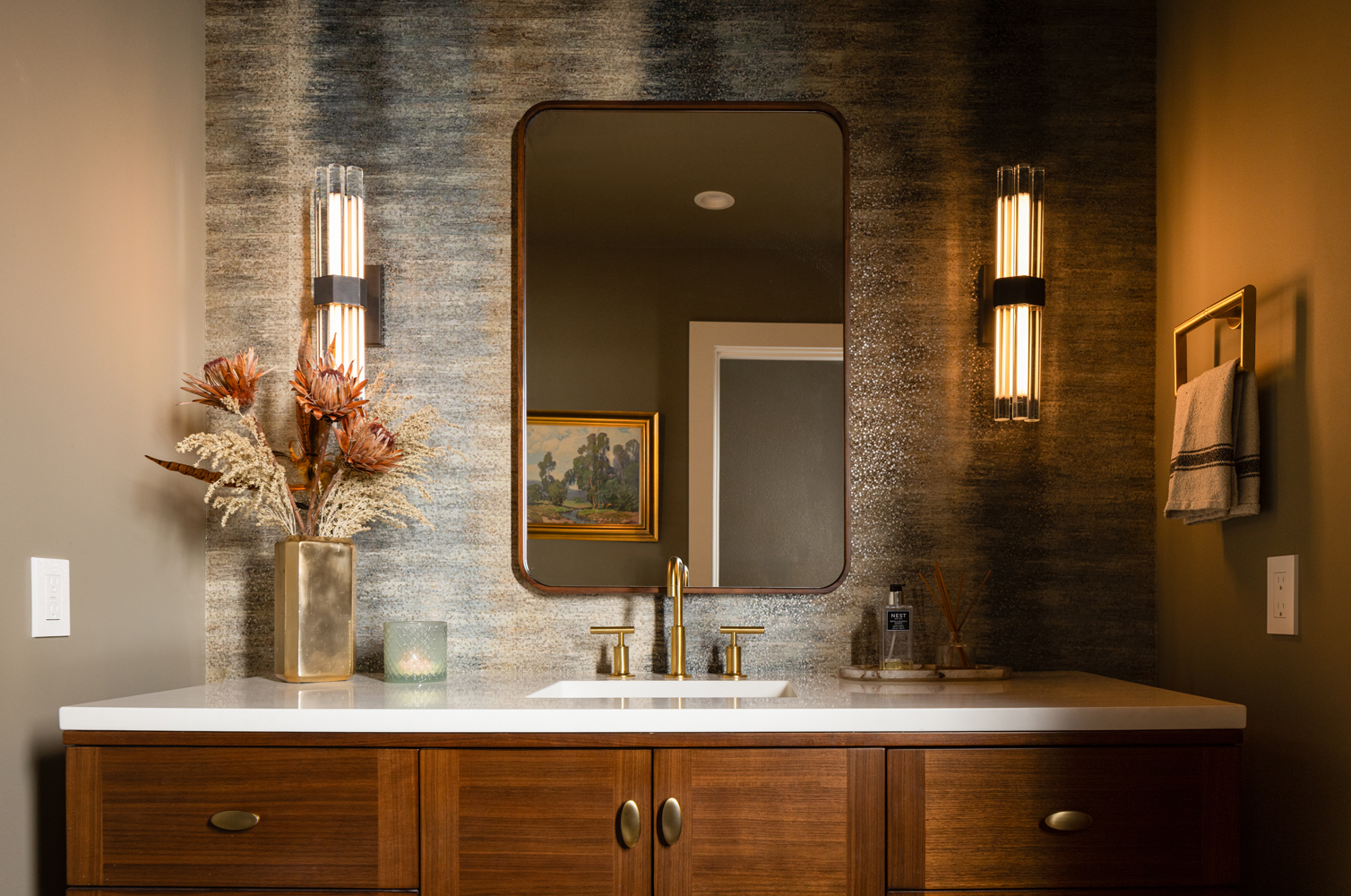
The most successful luxury bathrooms are not defined by one spectacular tile. They feel elevated because material, scale, placement, finish, grout, lighting, and installation have been considered together, with each decision reinforcing the larger design.
That is why tile should be reviewed alongside cabinetry, countertops, plumbing finishes, lighting, and surrounding materials rather than selected in isolation. A strong bathroom tile design supports the architecture of the room and gives every surface a clear role, whether the tile is meant to create continuity, introduce movement, add texture, or establish a focal point.
The goal is a bathroom that feels intentional when it is completed and remains appropriate to the character of the home over time. The most enduring bathroom tile ideas are not simply beautiful on their own—they are the ones that make the entire room feel cohesive.